Choosing Fence Posts and Foundations: The Hidden Infrastructure of a Solid Fence
When we assess a fence, our eyes usually go to the panel, the slat or the pattern. Yet whether a fence stays straight over the years and keeps its shape against wind and impact depends largely on an infrastructure you cannot see: the fence post and the foundation it sits on. In this guide we look at post types, the factors that affect post selection, the differences between concrete foundations and flanged mounting, and fixing approaches according to ground conditions. The guide is not meant for doing the installation yourself; it is designed to help you ask the right questions during the survey and quotation process and to understand the technical differences between quotes.
Why Are Posts So Important?
In fence systems, panels, slats or chain-link form the surface; but all the forces acting on this surface are transferred to the ground through the posts. Wind, a light knock from a vehicle, a person leaning on the fence or ground settlement over time affect the posts first.
Load transfer
The pressure wind exerts on the fence surface is transmitted to the foundation through the posts. The more closed and taller the surface, the greater the load on the posts. For this reason, post and foundation selection for screening systems requires more attention than for open systems.
Alignment and appearance
Posts also determine the line of the fence. Posts placed at regular intervals, at the same height and upright give the fence a neat, professional look. Posts that end up crooked or at different heights can make even the best-quality panel look bad.
Post Types
The posts used in fence systems differ by cross-section shape, position and fixing method.
By cross-section shape
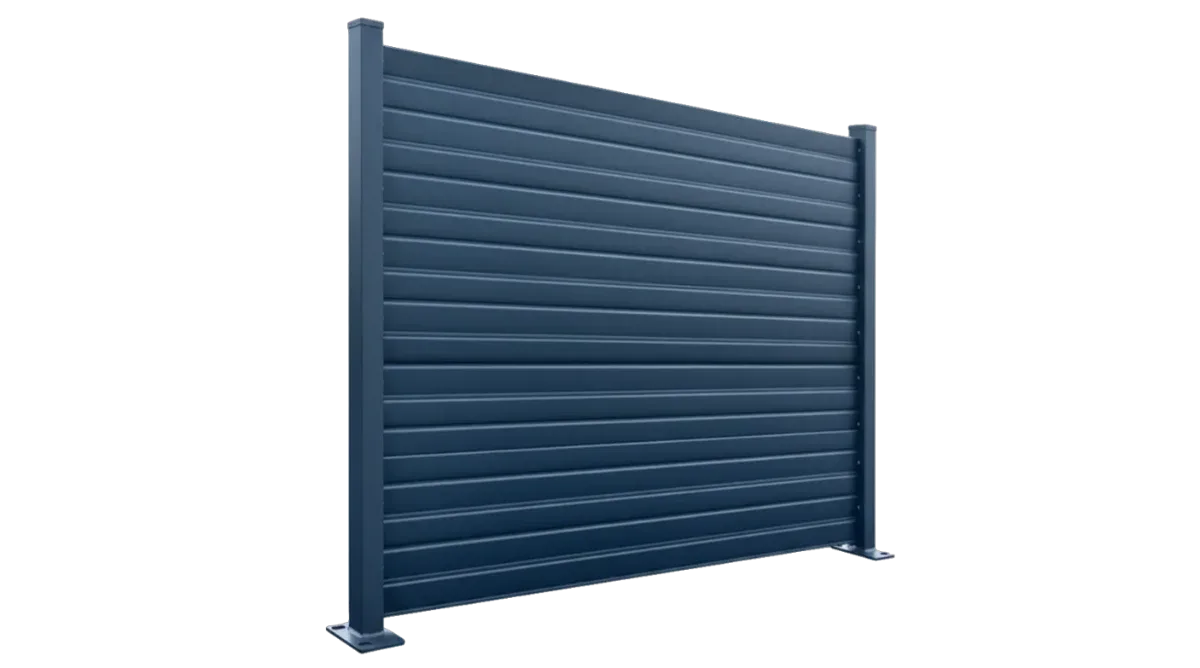
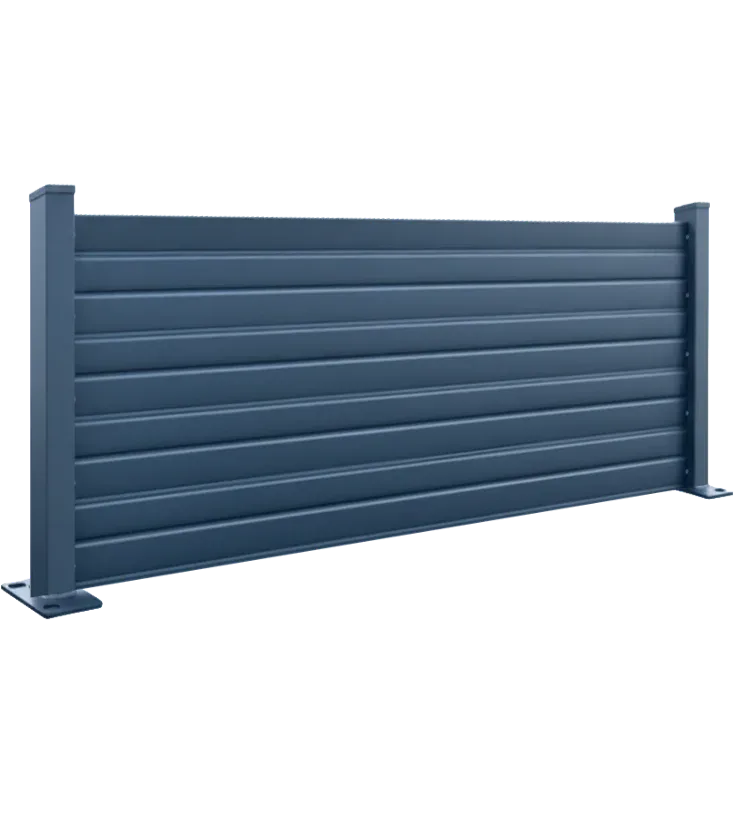
Box (rectangular or square) profile posts are widely used in panel and louvre systems. Round tube posts are preferred especially in chain-link systems. Section size and wall thickness determine the load a post can carry. TGO Çit Sistemleri's louvre fence model uses 1.4 – 1.6 mm box profile.
By position
Depending on their position along the fence line, posts take on different roles:
- Intermediate posts: Used between panels or slats on straight sections.
- Corner posts: Carry the load coming from two different directions at points where the fence changes direction.
- Start and end posts: Used where the fence joins a wall, building or gate.
- Gate posts: Usually chosen stronger because they carry the weight of the gate leaf and its opening and closing movement.
By fixing method
Posts are either set into the ground with a concrete foundation or fixed to a surface with a flange using anchors and plugs. In louvre fence railing installations, half-flange posts go at the wall ends and full-flange posts in the middle. We explain the details of this installation in our article on panel louvre fence railing installation.
Concrete Foundation or Flanged Mounting?
The fixing method is determined by the surface on which the fence will be installed. Both methods give strong results when applied correctly in the right situation.
Concrete foundation installation
On soil, a hole is dug for each post, the post is placed and concrete is poured to fix it. The depth and width of the foundation are determined by the height of the fence, the closure ratio of the surface, the ground structure and the wind conditions of the area. Not loading panels or slats before the foundation concrete has fully set is important for keeping the posts aligned.
Flanged mounting
On solid surfaces such as concrete ground, a garden wall or a retaining wall, posts are fixed through the flange plate at their base with plugs or chemical anchors. In this method the strength of the surface is decisive. A cracked, loose or very thin wall may not be able to bear the load the flange connection will carry.
Which one, when?
| Surface | Preferred method | Points to watch |
|---|---|---|
| Soil garden | Concrete foundation | Foundation depth, drainage |
| Concrete area | Flanged mounting | Concrete thickness and quality |
| Garden wall | Flanged mounting | Wall width, edge distance |
| Filled ground | Concrete foundation (enlarged) | Risk of settlement |
| Rocky ground | Core drilling or flange, depending on the case | Drilling method |
How Is Post Spacing Determined?
Post spacing is determined by the width of the panel or slat used. In panel systems, posts are placed according to panel width; in louvre systems, slat length and carrying capacity determine the spacing.
Factors affecting spacing
- Panel or slat width
- Fence height
- Closure ratio of the surface and wind conditions
- Slope of the land and step points
- Position of gates and corners
Widening the post spacing may at first seem to mean fewer posts and lower cost; however, spacing wider than the manufacturer intends can lead to problems such as panel sag and vibration in the wind. For this reason, spacing should be determined according to the technical specifications of the system.
Special Cases by Ground Condition
Not every plot offers standard soil. The following are conditions that should be assessed in particular during the survey.
Sloping land
On sloping land, posts are positioned at the step points. Step heights and post lengths are planned so that the gap between the bottom edge of the panel and the ground stays under control.
Filled and soft ground
On newly filled or soft ground there is a risk of the foundation settling over time. In these cases, enlarging the foundation dimensions or reaching a firmer layer is considered.
Utility lines
Water, gas, electricity or irrigation lines running along the fence line must be identified before digging the foundations. The location of these lines may require small shifts in post positions.
Drainage
Water collecting around the foundation can, in the long term, contribute both to ground settlement and to the risk of corrosion at the base of the posts. Shaping the top surface of the foundation so that water runs away from the post is a useful practice.
Special Attention to Gate Posts
Gate posts carry a different load from the other posts of the fence. The weight of the gate leaf, impacts during opening and closing and, for automatic gates, the forces created by the motor act on these posts. For this reason, gate posts are usually chosen with a larger section and their foundations are made stronger. For heavy sliding gates, a separate foundation is planned for the track on which the gate runs and for the gate stops. To assess gate and motor selection together, you can review our gate models and automatic gate motors.
Post Coating and Corrosion Protection
The part of the post near the ground is the part most in contact with moisture and soil. This is why the surface protection of posts plays an important role in a long-lasting fence. Protective layers such as galvanizing and electrostatic powder coating separate the metal from moisture and reduce the risk of corrosion. We explain the differences between these two coating methods in detail in our article on the difference between galvanizing and electrostatic powder coating. Covering scratches and knocks on posts during installation with suitable touch-up material is also important for the continuity of protection.
Post caps
Leaving the top opening of box and tube posts open can let rainwater in. Post caps prevent this, protecting the inside of the post and giving the fence a finished look. For details on fittings, see our article on fence accessories and fittings.
Post Approach by Fence System
Each fence system expects different behaviour from its posts. For this reason, post selection should not be considered independently of the type of fence to be used.
In panel fences
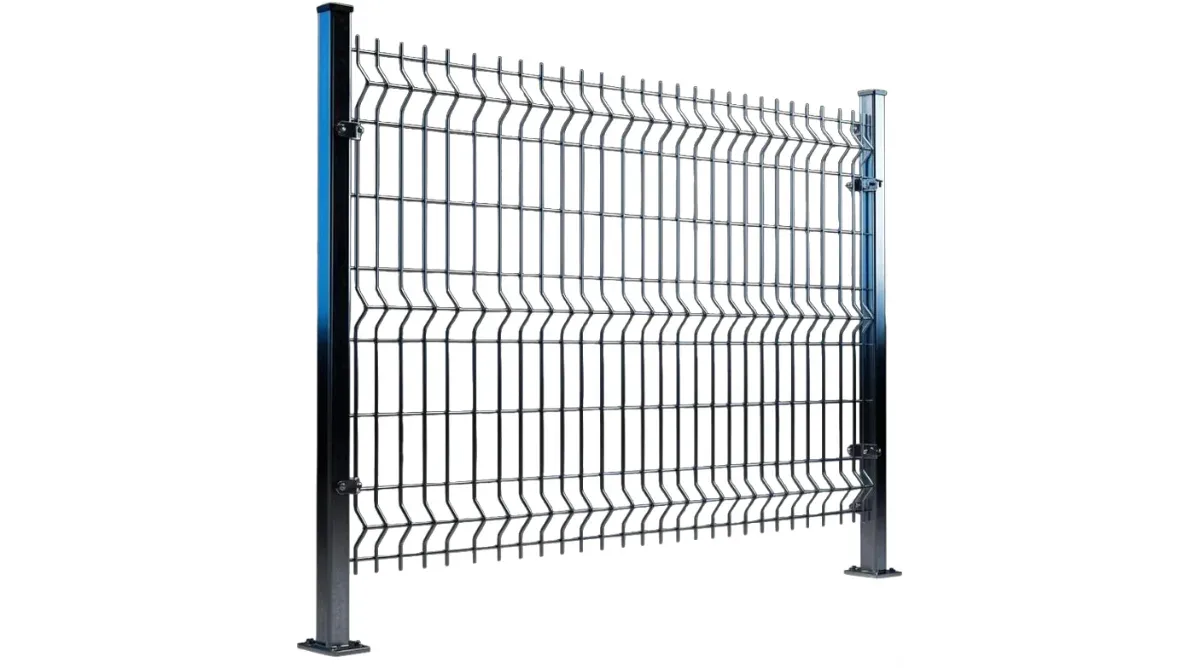
In panel fence systems, panels are fixed to the posts with clamps or special fittings. Because the panel is open, the wind load is relatively low; however, the weight of the panel and external impacts affect post selection. For rigid systems such as double panel, it is recommended that the posts have a section that supports this rigidity.
In louvre fences
In louvre fences, slats are inserted into channels inside the posts or into connection profiles. Because of the closed surface, the wind load is more pronounced; this makes post section, wall thickness and foundation size important. The front and back faces of the posts also determine the direction of the slat pattern.
In chain-link
In chain-link systems, tensioning the mesh applies a significant pulling force to the corner and start posts. For this reason, corner posts are often supported with struts. Intermediate posts carry the mesh and keep it in line.
In plastic wrought-iron style fences
In plastic wrought-iron style systems, posts are planned together with the system according to the pattern and height structure of the model. Even in lightweight models, fixing the posts properly to the ground or wall ensures that the pattern looks straight and balanced.
Post and Foundation Items When Comparing Quotes
When you get quotes from different companies, the post and foundation items are often the least noticed yet make the biggest difference. We recommend checking whether the following information is clearly stated in the quotes:
- Post section size and wall thickness
- Post surface coating
- Total number of posts and post spacing
- Fixing method (concrete foundation or flange)
- Specifications of corner and gate posts
- Post caps and fittings
If these items are not clearly stated, asking the company for details will allow you to make a sound comparison. You can review our production and quality processes on our quality page.
Frequently Asked Questions
Is a concrete foundation always necessary for a fence post?
No, it is not necessary in every case. For fences installed on soil, fixing the posts with a concrete foundation is the common method. However, on solid surfaces such as concrete ground, a garden wall or a retaining wall, posts can be fixed with a flange using plugs or anchors. Which method will be used is determined during the survey according to the strength of the surface and the load the fence will carry.
Does widening the post spacing reduce the cost?
Using fewer posts may at first seem to reduce cost; however, spacing wider than the system intends can lead to problems such as panel sag, vibration in the wind and loss of alignment over time. Repairing these problems can cost more than what was saved at the start. Post spacing should be determined according to the technical specifications of the panel or slat used.
Why are corner posts different?
Corner posts carry the panel or slat load coming from two different directions at the same time. In addition, tension and wind effects are distributed differently at points where the fence changes direction. For this reason, the connection details and fixing of corner posts require more care than intermediate posts. Correctly installed corner posts help the whole fence keep its alignment.
What should be considered when mounting posts on top of a wall?
In wall-top installation, the strength and width of the wall and the distance of the plug holes from the edge of the wall are important. On a cracked or loose wall, the flange connection may not provide enough grip. Drilling straight without widening the hole also affects the strength of the connection. You can find the details of this application in the railing installation guide on our blog.
Can I use existing posts for a new fence?
This depends on the condition and section of the existing posts and their compatibility with the new fence system. Posts that have corroded, bent or been placed at different spacings may not fit the new system. You can send photos and measurements of the existing posts to ask for a preliminary assessment; the final decision is made during the on-site survey.
The secret of a solid fence often lies in details you cannot see. The right choice of fence post and foundation directly determines the fence's alignment, its behaviour in the wind and its service life. To evaluate together which post and fixing method suits your project, you can request a free site survey.
Get a free site survey and price quote for your project.
Message Us on WhatsApp