Fence Accessories and Fittings: The Big Impact of Small Parts
When we think of a fence system, panels, slats or chain-link usually come to mind. Yet there are many small parts that hold these main components together, attach them to the posts, keep the fence aligned and make it easier to use. Although fence accessories and fittings account for a small share of the total cost of a fence, they directly affect its strength, appearance and service life. In this article we introduce the main accessories used in different fence systems and explain what to look for in terms of selection and maintenance.
Why Are Accessories Important?
A chain is only as strong as its weakest link. In fence systems too, even the best-quality panel or slat may not perform as expected because of a low-quality clamp or a rusting screw. The importance of accessories can be summarised as follows:
- Strength: Fittings are the elements that transfer the load on the surface to the posts.
- Alignment: The right fittings keep the fence straight and aligned over the years.
- Corrosion: Rust often starts at small fittings and spreads around them.
- Appearance: Post caps and colour-matched fittings give the fence a finished look.
- Security: Fittings that cannot be removed easily make unauthorised removal of the fence harder.
Post Accessories
Post cap
Post caps, which close the top opening of box and tube posts, prevent rainwater from getting inside the post. Water that gets in can cause corrosion on the inner surface of the post without being noticed. Post caps also give the fence a neat, finished look. It is important that caps sit firmly and do not fall off over time.
Flange plate
Flanged posts are fixed to concrete ground or a wall with plugs or anchors through the plate at their base. In louvre fence railing installations, half-flange posts are used at the wall ends and full-flange posts in the middle. We explain the details of flange connections in our railing installation guide.
Plugs and anchors
The plugs and anchors used to fix flanged posts are chosen according to the type of surface and the load to be carried. Mechanical plugs or chemical anchors may be preferred in different situations. Drilling straight without widening the hole directly affects the strength of the connection.
Strut
Especially in chain-link systems, corner and start posts are supported with struts against the pulling force created by tensioning the mesh. A strut is a support element attached to the post at an angle that transfers the load to the ground. For detailed information on posts and foundations, see our article on choosing fence posts and foundations.
Panel Fence Fittings
Clamps
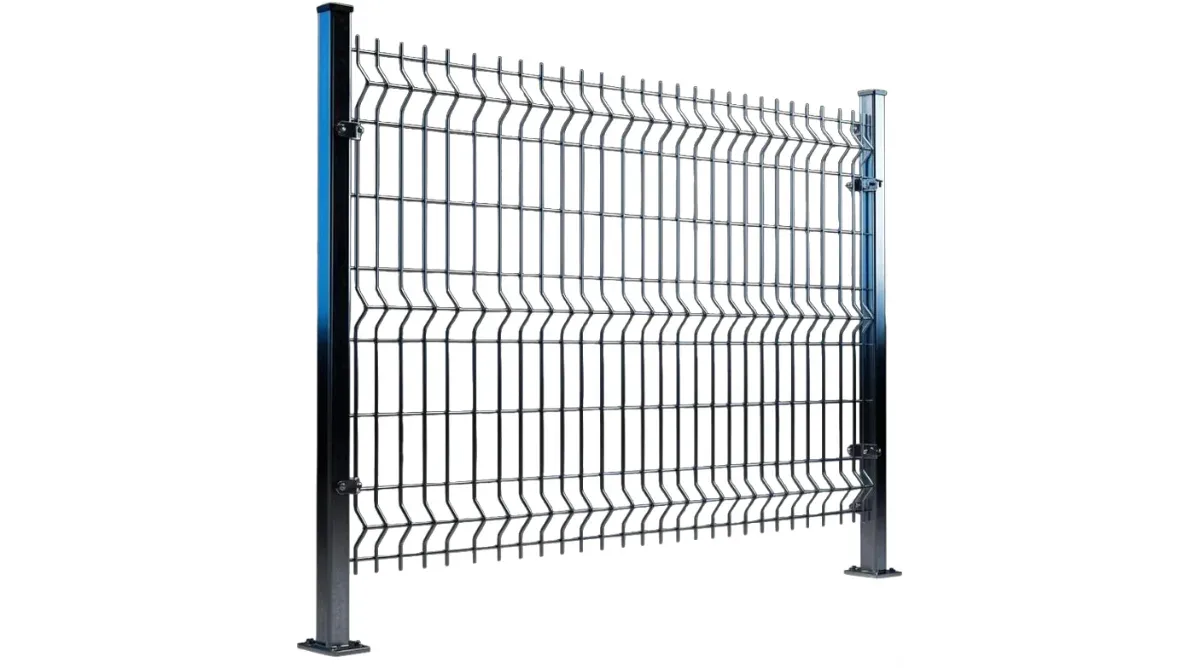
In panel fence systems, panels are attached to posts with clamps. Clamps fix the panel's wires to the post and stop the panel from moving. The number and position of clamps are determined by panel height. Clamps that are coated and rust-resistant keep this critical point where panel and post meet solid for a long time.
Corner connections
At corners where the fence changes direction, special fittings can be used to attach panels coming from two different directions to the same post. These parts give a neat joint and alignment at the corners.
Security bolts
In areas requiring high security, security bolts that cannot easily be removed with standard tools can be preferred. These bolts make unauthorised removal of the panels harder.
Louvre Fence Fittings
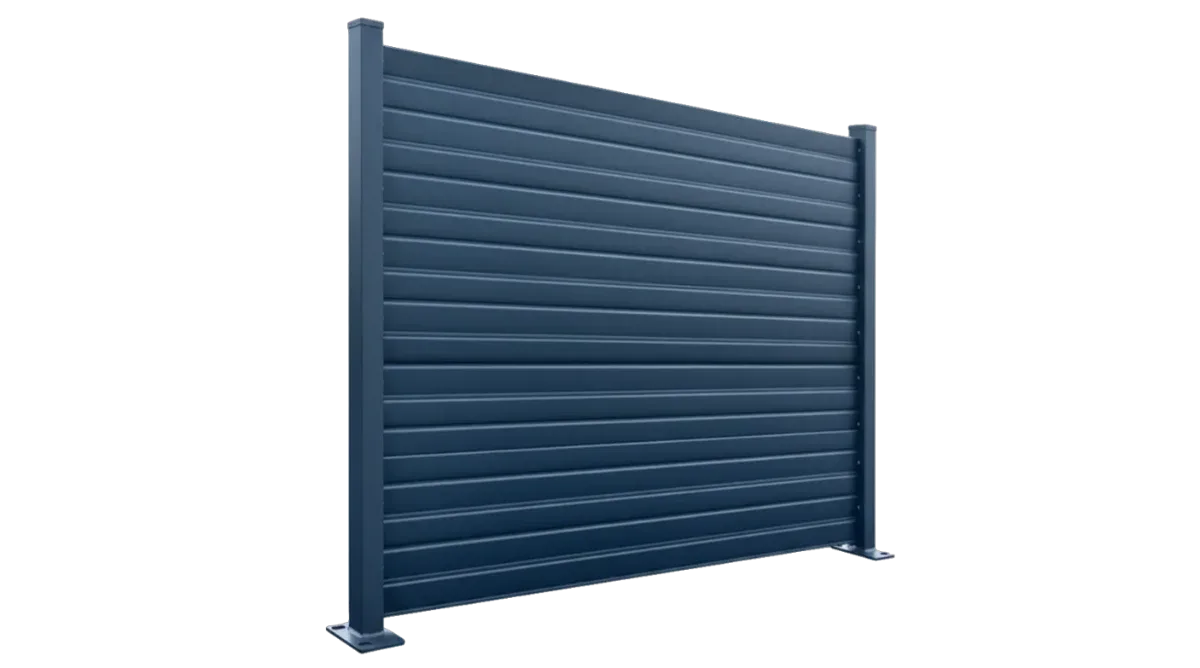
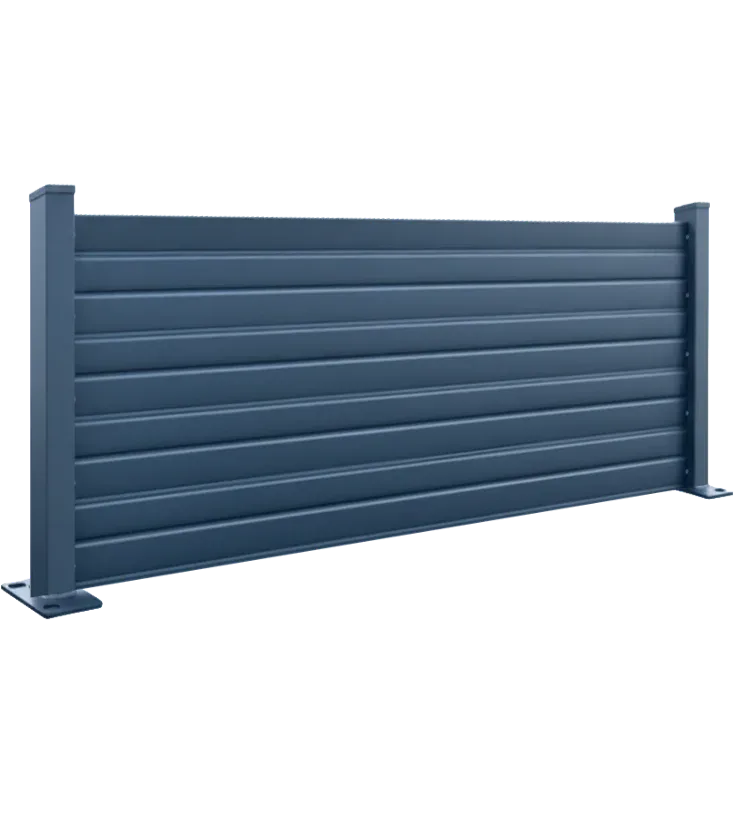
In louvre fence systems, slats are inserted into channels inside the posts or into connection profiles. Inserting the slats in the right direction and firmly prevents noise and vibration in the wind. Top finishing profiles close the top edge of the slats, give the fence a neat look and stop the slats from coming out. The fittings used for our louvre fence model are planned to be compatible with the system. For how louvre fences interact with wind, see our article on wind load and fence selection.
Chain-Link Accessories
Tension wire
In chain-link systems, tension wires running through the top, middle and bottom of the mesh prevent it from sagging and keep it taut. It is important that the tension wires are to the same coating standard as the mesh.
Tensioners
Tensioners used to tighten the tension wires allow the wire tension to be adjusted. Wires that loosen over time can be re-tensioned using these elements.
Tie wire
The thin wires used to tie the mesh to the tension wires and posts keep the mesh in place. The spacing and tightness of the tie wires affect how neat the mesh looks.
Tension bar
Tension bars used where the mesh is attached to start, end and corner posts keep the edge of the mesh straight and tight.
Top Security Accessories
Bracket arms
Top security elements such as barbed wire and razor wire are applied using bracket arms mounted on the tops of the posts. Bracket arms can be straight, “V” or “Y” shaped. Outward-angled brackets focus on making climbing from the outside of the fence harder.
Razor wire clips
Clips are used to fix helical razor wire to the bracket arms and tension wires. These clips keep the razor wire in place and at even intervals.
Because the installation and maintenance of top security elements involve sharp parts, they should be carried out by experienced teams with suitable protective equipment.
Gate Accessories
Hinges
On swing gates, hinges carry the weight of the gate leaf and allow it to open and close. The type and number of hinges are chosen according to the weight and width of the leaf. Adjustable hinges make it possible to correct any sagging that may develop over time.
Locks and latches
Locks and latches used on pedestrian and vehicle gates allow the gate to close securely. Self-locking latches stand out around pools and in gardens with pets. For details, see our guides to pool fencing and garden fences for pets.
Gate stops and holders
Holders that keep swing gates fixed in the open position and stops that make the gate halt at a certain point prevent the gate from slamming in windy weather.
Sliding gate accessories
On sliding gates, the track, wheels, upper guide rollers and gate stops ensure smooth movement. On automatic gates, the gear rack through which the motor moves the gate is an important part. Our automatic gate motors category includes Nice models; the motors can be used with accessories such as photocells, remote controls and flashing lights.
Accessories for Plastic Wrought-Iron Style and Artificial Grass Fences
Plastic wrought-iron style fittings
In plastic wrought-iron style fence systems, panels are fixed to posts and fittings compatible with the system. Because these systems are lightweight, making the connections neatly and in line is especially important so that the pattern line continues without waving. In illuminated plastic wrought-iron style models, the lighting elements and cable connections must be suitable for outdoor conditions.
Artificial grass fence fittings
Artificial grass fence is fixed to the existing wire or panel fence with ties. Making the connections at close intervals prevents the artificial grass fence from flapping and tearing in the wind. It is also important for long-term use that the ties are resistant to sunlight.
Planning Spare Parts
Especially in projects with long perimeter lines and in public areas, obtaining spares of some accessories at the start of the project is a practical approach. Having small parts such as post caps, clamps, bolts and touch-up paint in reserve means that repairs can be made quickly in case of damage. In addition, spare parts from the same production batch match the fence better in colour and coating. For large projects such as residential complexes, factories and public institutions, it is recommended that the spare parts list be determined at the quotation stage. For such projects, see our guides to fencing for residential complexes and apartment buildings and factory perimeter security.
What to Consider When Choosing Accessories
Compatibility with the system
Accessories must be compatible with the fence system used. There may be differences in dimensions and connections between systems from different manufacturers; for this reason it is recommended that accessories be obtained from the same source as the system.
Coating compatibility
Having fittings to the same or a compatible coating standard as the fence is important for both appearance and corrosion. Contact between different metals in the presence of moisture can cause one of them to corrode faster. For detailed information on rust, you can read our article on rust problems in fences.
Colour matching
Having visible fittings, post caps and gate accessories in the same or a matching colour as the fence gives it a unified look.
Maintaining Accessories
- Checking clamps and bolts at least once a year and tightening any that have loosened
- Replacing rusted fittings with suitable new ones
- Renewing post caps that have fallen off or broken
- Checking tension wires and tensioners on chain-link
- Lubricating gate hinges in line with the manufacturer's recommendations
- Keeping sliding gate tracks and wheels clean
For a general maintenance schedule, see our guide to fence maintenance and cleaning.
Frequently Asked Questions
Is a post cap really necessary?
Yes, it is recommended especially for box and tube posts. On posts without caps, rainwater can get inside and cause corrosion on the inner surface without being noticed. Post caps prevent this and give the fence a finished look. It is important to renew caps that have fallen off or broken in good time.
How should I replace a rusted bolt?
A rusted bolt should be replaced with a new one that is compatible with the system and suitably coated. If rust has started on the surface to which the bolt is attached, that point should be cleaned and covered with suitable touch-up material during replacement. To avoid contact between different metals, make sure the new part is compatible with the fence system.
Can I use another company's accessories?
Because there may be differences in dimensions and connections between systems from different manufacturers, compatibility problems may arise. In addition, different coatings and colour tones can affect the unity of appearance. For this reason we recommend obtaining accessories from the same source as the fence system.
My chain-link is sagging. Which part should I check?
First, check the tension of the tension wires and tensioners. Then check whether the corner and start posts and struts are solid. Also check whether any tie wires have broken. Loosened wires can be re-tensioned with the tensioners; if there is a problem with the posts, an expert assessment may be needed.
Can accessories be added to an automatic gate later?
In most cases, accessories such as photocells, flashing lights and additional remote controls can be added to the existing system; however, the accessory to be added must be compatible with the motor and control unit. It is recommended that such additions be made by an authorised technical service. For questions about your gate, also see our guide to automatic gate troubleshooting.
Asking the company that installs your fence for a list of the accessories used and how to obtain spare parts also lets you quickly find the right part when you need it later. Especially for gate and motor accessories, having the model information on record makes service and spare part processes easier. Keeping your fence's model, colour, installation date and the accessories used in a simple notes file lets you find the right information even years later.
A little preparation brings great convenience.
Small-looking fence accessories and fittings are the unseen heroes that keep your fence straight and solid for years. Choosing parts that are compatible with the system and suitably coated, and checking them regularly, is the easiest way to prevent major problems. For your fence's accessory and spare part needs, you can contact us.
Get a free site survey and price quote for your project.
Message Us on WhatsApp