Wind Load and Fence Selection: How to Plan a Fence in Windy Areas
A fence installed on open land, on a hilltop, by the sea or on the roof of a tall building is put under far more strain than a fence in a sheltered garden. The main source of this strain is wind load. Wind exerts pressure on the surface of the fence, and this pressure is transferred to the foundation through the posts. When a fence system is not planned with this load in mind, problems such as vibration, noise, bending posts and loosening connections can occur. In this article we look at how wind interacts with a fence, what to consider when making a fence selection in windy areas, and approaches to solving common problems.
How Does Wind Affect a Fence?
When wind hits a surface, it exerts pressure on that surface. The size of this pressure depends on the wind speed, the size of the surface and how closed the surface is. A closed surface meets the wind fully, whereas an open fence lets most of the wind pass through.
Surface closure ratio
When assessing fence systems in terms of wind, the most decisive factor is the closure ratio. Open systems such as chain-link and panel fences let most of the wind through. Louvre fences block the view with their slats while letting part of the wind pass through their air gaps. Fully closed sheet or wall-like surfaces are the systems that meet the wind the most.
Effect of height
As the height of a fence increases, the area exposed to wind grows. In addition, wind generally blows more strongly higher above the ground because it meets fewer obstacles. For this reason the effect of wind becomes more pronounced on tall fences. For details on the height decision, see our article on how to choose fence height.
Effect of location
The same fence behaves one way among buildings in a city and another way on open land or a hilltop. Buildings, trees and uneven terrain slow the wind down, while open land, coasts and high points let it blow freely. Building corners and narrow passages between two structures can be points where the wind speeds up.
How Fence Systems Interact with Wind
Panel fence
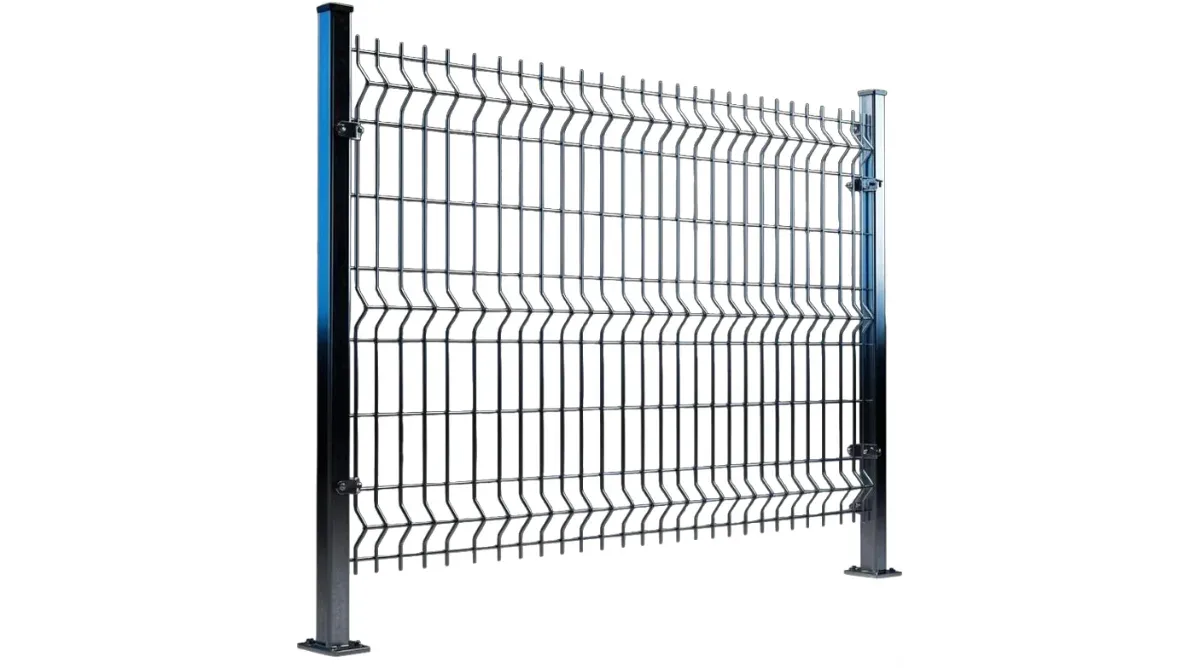
Panel fence systems let most of the wind through thanks to their open wire grid structure. This makes them a trouble-free option in windy areas. However, when artificial grass fence or a similar screen is added to the panel, the closure ratio rises and the wind load changes; this should be reassessed in terms of posts and connections.
Chain-link
Galvanized chain-link is one of the systems least affected by wind thanks to its flexible structure and open mesh. This is why it is often preferred on open land, farmland and in coastal areas.
Louvre fence
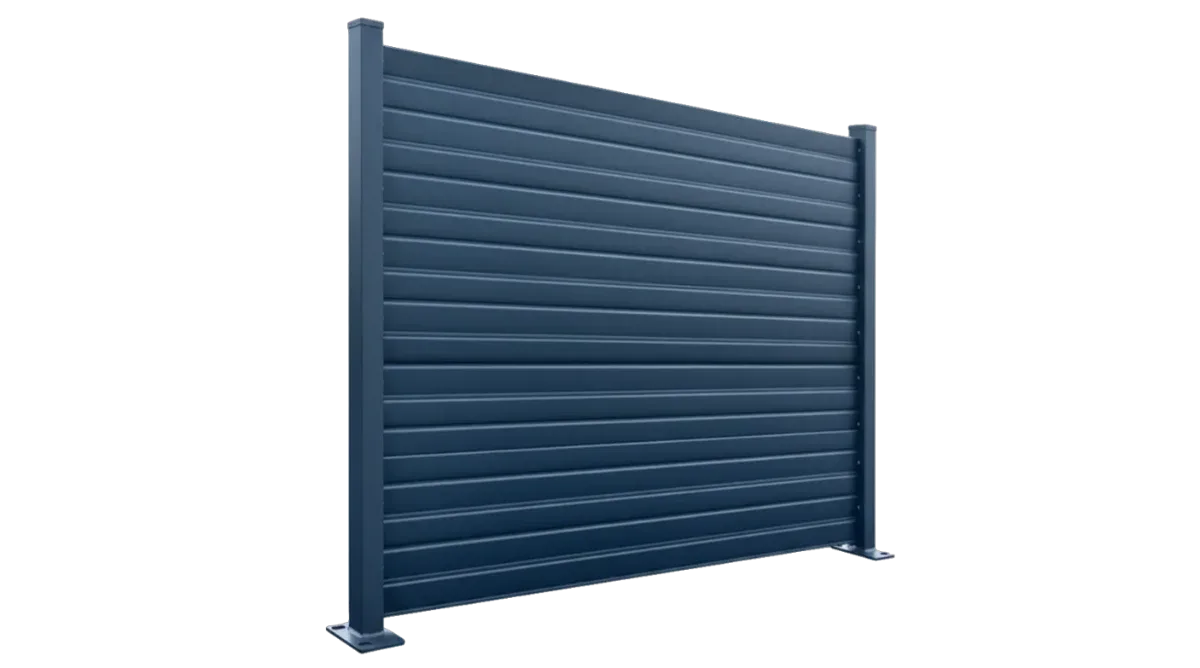
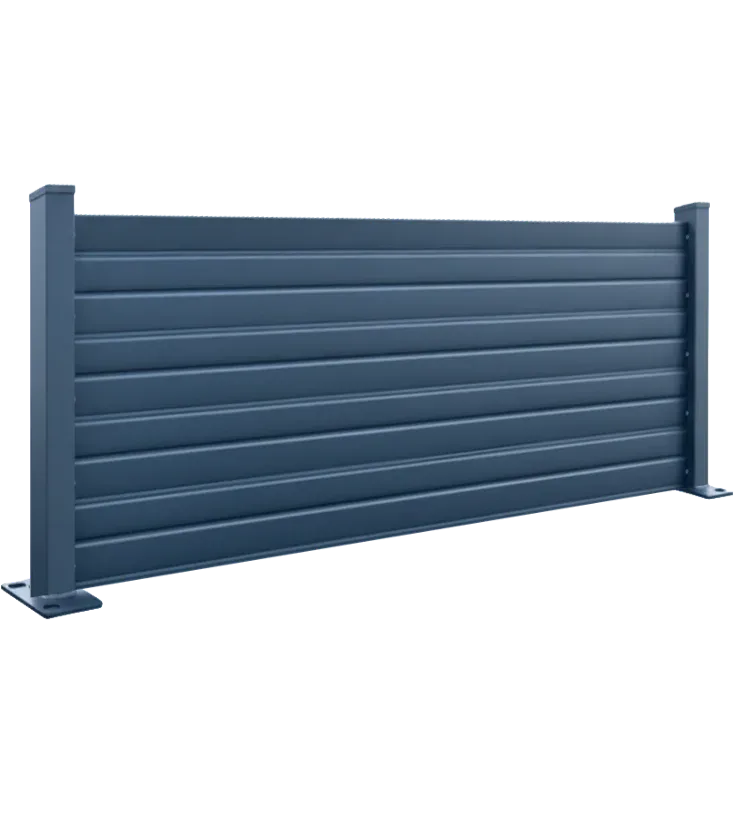
Louvre fence provides privacy but interacts more with the wind. The air gaps between the slats let part of the wind through, balancing the load compared with a fully closed surface. Our louvre fence model uses 1.4 – 1.6 mm box profile. If louvre fence is chosen for windy locations, the planning of posts, foundations and connections requires more care.
Plastic wrought-iron style fence
Plastic wrought-iron style models let a significant part of the wind through thanks to their patterned, open structure. However, because they are lightweight, it is important that the posts are fixed firmly to the ground or the wall.
Artificial grass fence
Artificial grass fence largely closes the surface of the wire or panel fence it is applied to. If artificial grass fence is to be used in windy areas, it should be assessed whether the supporting fence is suitable for this additional load.
Planning Steps in Windy Areas
Step 1: Assess the location
Determine whether your plot is on open land, on a hilltop, on the coast or in a sheltered area. Note which direction the prevailing wind blows from and which sides were most affected in past storms. The condition of fences and trees on neighbouring properties can also give you an idea.
Step 2: Assess each side separately
The side most exposed to wind and the sheltered sides can be enclosed with different systems. For example, an open panel fence can be chosen for the side facing the prevailing wind, and louvre fence for privacy on the sheltered sides.
Step 3: Balance the height
On windy sides, instead of choosing a closed fence that is taller than necessary, setting the most suitable height that meets your privacy needs balances the load.
Step 4: Plan posts and foundations accordingly
For closed and tall fences, post section, wall thickness, post spacing and foundation size should be determined according to wind conditions. We explain the details of choosing posts and foundations in our article on choosing fence posts and foundations.
Step 5: Assess wall-top installations carefully
In wall-top installations, wind load is transferred to the wall through the flange connections. The strength of the wall and the connection details are critical, especially for closed fences. You can find the finer points of wall-top installation in our railing installation guide.
Common Problems and Solution Approaches
The fence makes noise in the wind
Whistling sounds or rattling in the wind usually come from loose connections, vibrating slats or gaps between fasteners. Checking and tightening the connections reduces the problem in most cases. If the noise comes from a specific point, the connection detail in that area should be examined.
Vibration in slats or panels
Vibration may be related to post spacing that is wider than the system allows for, or to loosening connections. Since long-term vibration can lead to fatigue at connection points, an expert assessment is recommended.
Bending posts
If you notice after a storm that one or more posts have bent, this may indicate that the foundation or the post was insufficient for the wind load. Bent posts need to be inspected on site and, if necessary, reinforced or replaced.
Gates slamming in the wind
Swing gates can open and close on their own in the wind, damaging both themselves and the posts. Gate stoppers, leaf holders and properly working locking mechanisms prevent this problem. For automatic gates, it is important to choose a motor suited to wind conditions; for the differences between swing and sliding gates, see our article on sliding or swing garden gates.
Post-storm checklist
- Whether the posts are upright and in line
- Whether there are cracks or movement around the foundation
- Whether slats, panels and fasteners are in place
- Whether the gates open and close properly
- Damage caused by fallen branches or wind-blown materials
Balancing Wind and Privacy
For people living in windy areas, the hardest decision is the balance between privacy and wind load. A fully closed surface provides the most privacy, but it also meets the wind the most. Some approaches to striking this balance are:
- Providing privacy only in the sections where it is needed, for example around the seating area
- Choosing louvre systems with air gaps
- Creating a natural, permeable screen with planting on the windward side
- Concentrating the screen at eye level rather than at the top of the fence
We compare the different screening options in our privacy screen fence guide.
The Fence as a Windbreak
Fences are not only affected by wind; they can also create more sheltered areas in the garden by redirecting and slowing the wind. But there is an important detail here: although a fully closed surface seems to cut the wind, it can create turbulence behind it. Partly permeable surfaces, on the other hand, slow the wind down rather than stopping it completely, creating a calmer and wider area behind them. So if you want to create a seating area sheltered from wind in your garden, louvre systems with air gaps or solutions that combine fencing with planting can be considered.
Support with planting
Shrubs and hedge plants planted in front of or behind the fence form a natural screen that slows the wind. Plants can improve wind comfort in the garden without adding to the load on the fence itself. It is important to plant them at a distance where they will not lean on the fence and their roots will not damage the post foundations.
Layout according to wind direction
If you are planning a seating area, pool or children's play area in the garden, placing these in the sheltered sections opposite the direction of the prevailing wind and planning the windward side accordingly gives a more comfortable result for both the fence and the use of the garden.
Roof and Terrace Installations
Roof terraces and balconies on high floors are among the places where wind is strongest. Fence or railing installations in these areas face much greater wind load than those at ground level. For this reason, system selection and connection details for roof and terrace installations must be assessed on site, and if necessary the structural condition of the building should also be taken into account.
Frequently Asked Questions
Can louvre fence be used in a windy area?
Yes, it can, but planning must take wind conditions into account. The air gaps in louvre fences let part of the wind through and help balance the load. Nevertheless, post section, post spacing, foundation size and fence height should be determined according to the wind conditions of the area. During the survey we assess these conditions on site and plan accordingly.
Which fence is least affected by wind?
Open systems, namely chain-link and panel fence, are among the systems least affected by wind because they let most of it through. Plastic wrought-iron style fence also lets a significant part of the wind through thanks to its patterned, open structure. However, when a screen is added to these systems, the wind load increases and a reassessment is needed.
My fence makes noise in the wind. What should I do?
Noises in the wind mostly come from loose connections or vibrating slats or panels. First, you can check the fasteners and tighten any that are loose. If the noise continues or comes from a specific point, it is recommended that an expert examine the connection detail in that area. You can send photos and a short video to ask for a preliminary assessment.
Will adding artificial grass fence to my existing panel fence cause problems in the wind?
Because artificial grass fence largely closes the surface of the panel fence, it increases the wind load. In sheltered gardens this usually causes no problems; however, in windy locations it is recommended to assess whether the existing posts and connections are suitable for this additional load. If necessary, artificial grass fence can be applied only to the sections where it is needed.
How should I check my fence after a storm?
After a storm, check whether the posts are upright and in line, whether there are cracks or movement around the foundation, whether slats, panels and fasteners are in place and whether the gates work properly. If you see noticeable bending or damage, we recommend getting an expert assessment so that the problem does not grow.
When having a fence built in a windy area, observing fences on neighbouring properties also provides valuable information. Noticing which systems have stayed in good shape over the years and which have shown bending or loosening helps you make a more informed decision for your own project.
Wind load is a factor that is often overlooked in fence planning, but its consequences are felt in the long term. Assessing the location correctly, treating each side separately, balancing height and closure ratio and planning posts and foundations accordingly will give you a trouble-free fence even in windy areas. To evaluate your project together with its wind conditions, you can contact us.
Get a free site survey and price quote for your project.
Message Us on WhatsApp