How to Choose Fence Height: A Decision Guide by Use
One of the most important decisions in a fence project is fence height. A fence that is too low may not provide the privacy or security you expect, while a fence that is higher than necessary increases wind load, can make the view feel heavy and may conflict with local rules in some areas. In this guide we explain how height can be chosen according to what the fence will be used for, which factors should be considered while deciding, and the most common mistakes. The examples in this guide reflect general tendencies; the decision for your own project becomes clear during the site survey.
Key Questions That Shape the Height Decision
Asking yourself three questions before setting the height quickly narrows down the options.
What should the fence block?
Do you want to block the view, people passing through, animals, or simply mark the boundary? Blocking the view requires a height above eye level, whereas a lower fence may be enough to mark a boundary.
Where will the fence be seen from?
Whether the fence is seen from inside or outside, from close up or from a distance, changes the perceived height. In a garden that sits above street level, a fence of the same height looks lower from outside.
What is behind the fence?
Different uses such as a seating area, pool, play area or storage area create different height needs. For this reason, different heights can be chosen for different sections even within a single plot.
Height Approach by Area of Use
The headings below summarise the approaches that stand out in different areas of use. Dimensions are determined by the standard heights in which a product is offered and by project conditions.
Front garden and entrance
In front gardens the aim is usually to define the boundary and highlight the façade of the house. A lower, more inviting fence is therefore preferred. Decorative plastic wrought-iron style fence models come with different height options; for example, the Beril series offers H40 and H100, and the Lalehan series offers H35 and H100. The “H” value in the model names indicates the height option.
Back garden and seating areas
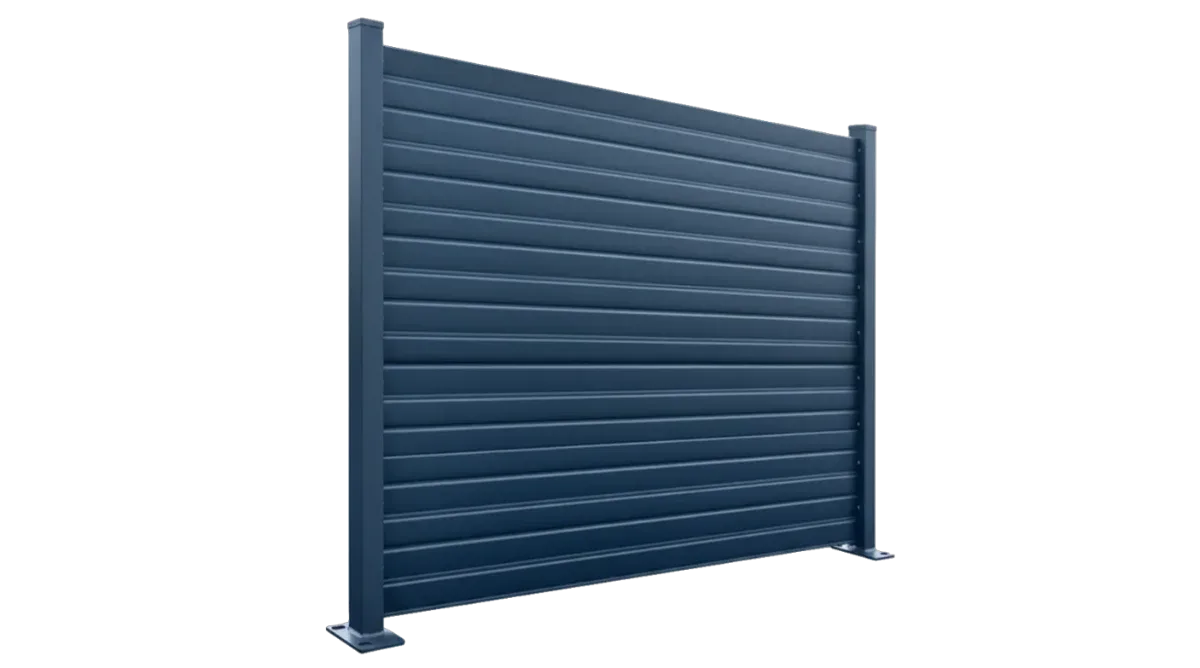
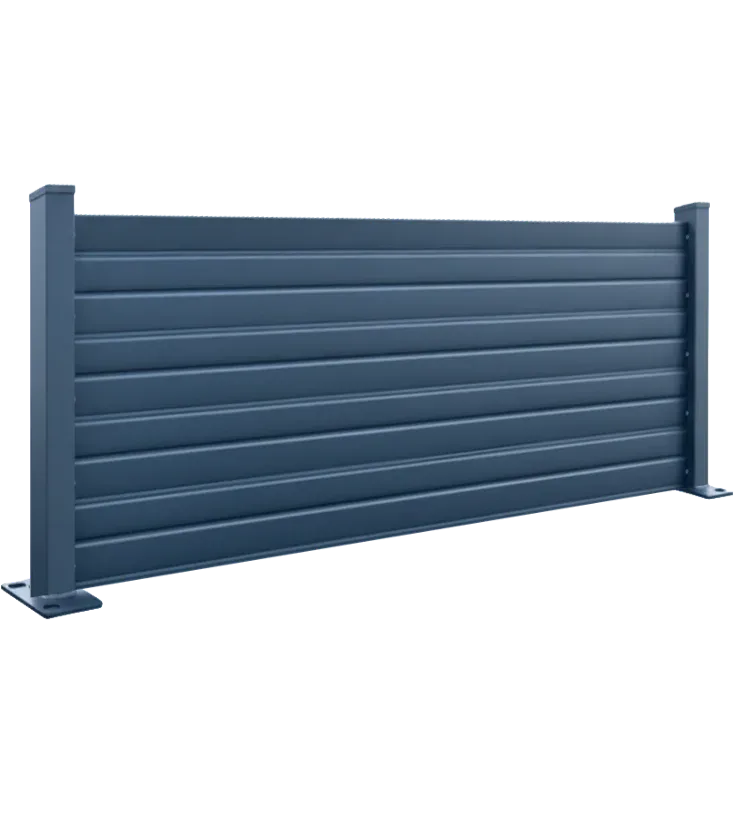
When privacy is the priority in the back garden, a height above eye level is preferred. Louvre fence systems are often used for this purpose. The screening height can also be increased by applying artificial grass fence on top of an existing fence.
Residential complexes and apartment buildings
In shared areas, a balance between security and appearance is sought. The height decision is usually taken by the complex management, and it is recommended that it be applied consistently around the whole perimeter. For more detail, see our guide to fencing for residential complexes and apartment buildings.
Factories and industrial facilities
In industrial facilities, height is set with the aim of making climbing harder and slowing it down. In addition to the fence height, elements used on top such as barbed wire or razor wire increase the effective height. For the planning steps, you can review our factory perimeter security guide.
Sports fields
On sports fields, height is set so that the ball does not leave the pitch, and it varies with the type of field. Higher sections can be used behind the goals and lower sections along the sidelines. For details, see our sports field wire fences page.
Farmland and animal areas
Along the boundaries of fields, vineyards and orchards, height depends on the area to be protected and the type of animal to be kept out. Galvanized chain-link is offered in heights of 100, 120, 150, 180 and 200 cm; this flexibility adapts to different needs.
Technical Factors That Directly Affect Height
The physical conditions of the land and the structure affect the height decision as much as the intended use.
Wind load
As a fence gets taller, the surface area exposed to wind grows. This effect is more pronounced on surfaces that block the view. If a tall, closed fence is preferred, the post section, post spacing and foundation size should be planned accordingly. You can find details on this topic in our article on wind load and fence selection.
Slope of the land
When a fence is installed in steps on sloping land, height differences occur at the step transitions. Step heights must be calculated carefully so that the gap between the bottom of the panel and the ground does not grow on the sloping sections.
Installation on top of a wall
If the fence is mounted on top of a garden wall, the total height is the wall height plus the fence height. In this case the height perceived from outside may be greater than expected. For details of wall-top installation, take a look at our railing installation guide.
The gap between the ground and the fence
The gap left between the bottom edge of the fence and the ground matters for rainwater drainage, garden maintenance and the passage of small animals. Families with pets may prefer to keep this gap as small as possible.
Local Rules and Relations with Neighbours
Fence height is not only a technical decision. The zoning practices of your area, the management plan of your complex or the local rules of your municipality may include limits on garden wall and fence height. Since these rules vary from region to region, we recommend consulting your municipality or complex management before the project. Talking with your neighbour in advance about shared boundaries also prevents disputes that might arise later. For the general framework on this topic, you can read our article on permits and neighbour boundaries in fence construction.
Common Mistakes When Choosing Height
Using a single height around the whole perimeter
Not every side of a plot has the same need. Using a low fence at the front and a tall fence at the back balances both the budget and the appearance.
Not taking gates into account
A mismatch between fence height and gate height creates an eye-catching flaw at the entrance. Gate models should be chosen in the same height and form language as the fence; our gate models make this harmony easier.
Not thinking about future use
If there are plans such as building a pool in the garden later, adopting a dog or adding a new warehouse to the facility, the height decision should be made with these plans in mind. Raising a fence afterwards often requires the system to be reinstalled.
Reading Height Options by Fence Type
The production structure of each fence system also determines the heights that can be offered. Reading the height information correctly when reviewing product pages makes your decision process easier.
Height in panel fences
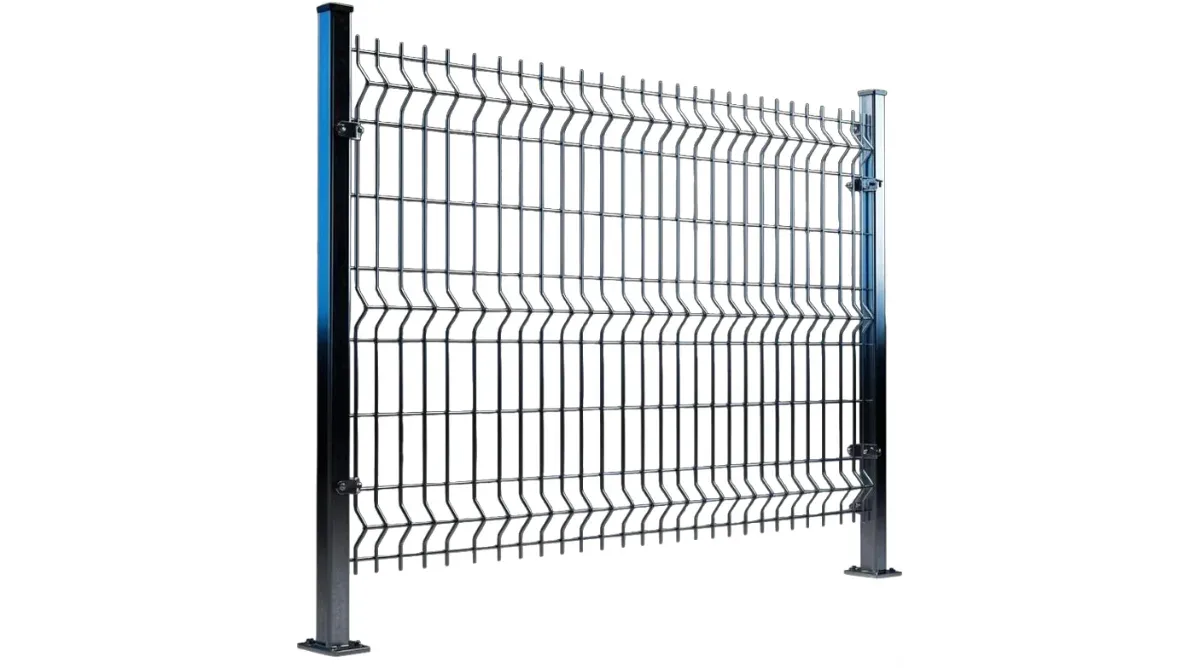
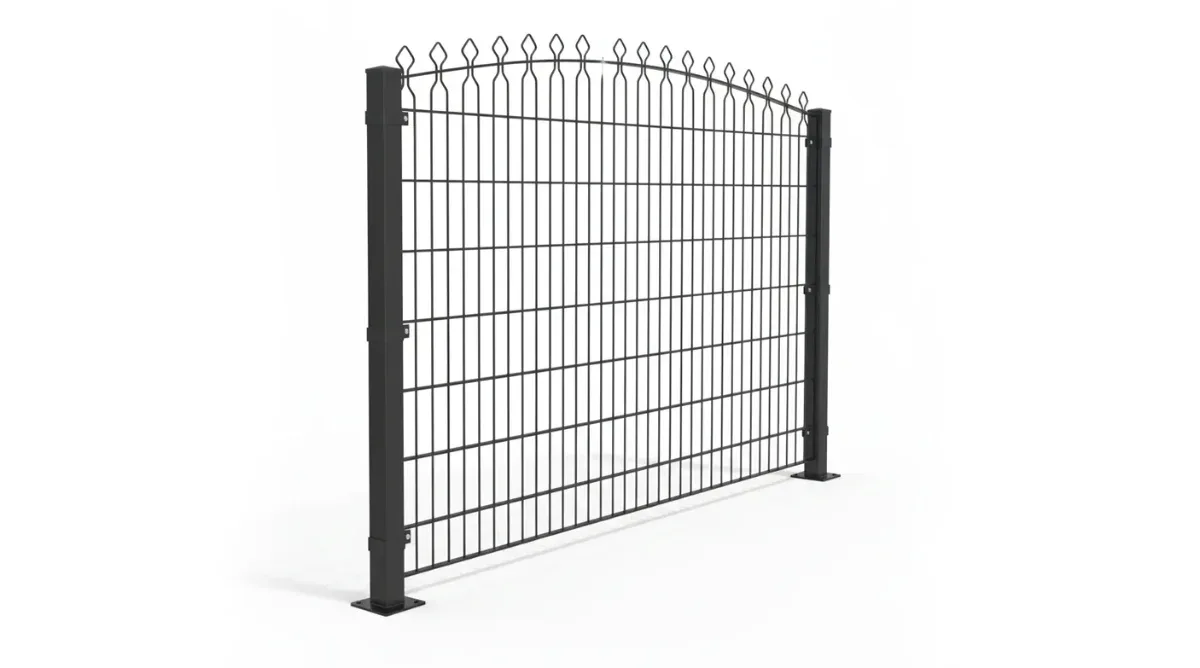
Panel fences are produced in specific panel heights, and posts are selected according to this height. In double panel and single panel systems, panel height is assessed together with the part of the post that is embedded in the ground or fixed with a flange. On tall panels the post section must also be suitable.
Height in louvre fences
In louvre fences, height is created by the number of slats stacked on top of each other. This structure provides flexibility in height for made-to-measure production. However, as height increases, the strength of the posts carrying the slats and the post spacing become even more important.
Height in plastic wrought-iron style fences
In plastic wrought-iron style models, the height is usually indicated in the model code. For example, the Semazen series has options such as H60, H65, H90 and H100, and the Zümrüt series has H75 and H100. This makes it possible to use the same pattern language at different heights and create harmony between the front garden and the side boundaries.
Height in chain-link
Chain-link is produced in rolls of specific heights. Galvanized and PVC-coated mesh is available in options from 100 cm up to 200 cm. The tension of the mesh and its top wire become more important as the height increases.
A Simple Test Before You Decide
You can place temporary battens or stretch a string at several points along the line where the fence will be installed, showing the height you have in mind. Looking at this line from different points in your garden, from the seating area and from the street lets you realistically see what the height will mean for privacy and appearance. This simple test is the most practical way to adapt catalogue dimensions to your own space.
Evaluating together during the survey
During the free on-site survey, our team evaluates the slope of the plot, the condition of the walls, wind conditions and your intended use together with you. Based on this evaluation, a proposal is prepared with the appropriate height and system for each section. To learn about our quality and production processes, you can visit our quality page.
Height and Visual Balance
Fence height is not only a question of function but also of visual proportion. A very tall fence in front of a single-storey house can overshadow the façade and make the house look smaller than it is. Conversely, a fence that is too low in front of a wide, tall building can blur the boundary. To strike this balance, it helps to relate the fence height to the horizontal lines of the façade, such as window sills, entrance steps and the garden wall. Also, since trees and hedges in the garden will grow over time, deciding on the height of fences used together with plants by considering the future size of the plants gives a more harmonious result.
Colour also affects perceived height. Dark fences, especially anthracite tones, leave a more pronounced and heavier impression on the façade, while light-coloured fences look lighter and more open. If you prefer a tall fence, you can choose the colour with this effect in mind; we cover colour selection in detail in our article on choosing a fence colour.
Frequently Asked Questions
What is the ideal height for a garden fence?
There is no single ideal height; the right height depends on the purpose of the fence. If you only want to mark the boundary and keep the front garden looking tidy, a lower fence may be enough. If you want privacy, a height above eye level is preferred. The slope of the plot, whether the fence is mounted on a wall and local rules also affect the decision. During the survey we evaluate these factors together and recommend the height that suits you.
Do I need a permit for fence height?
This depends on the zoning practices of your area, the local rules of your municipality and, if there is one, the management plan of your complex. Some areas may have limits on garden wall and fence height. We recommend consulting your municipality and complex management before the project. Reaching an agreement with your neighbour in advance about shared boundaries is also helpful.
Does a tall fence cause problems in the wind?
As a fence gets taller, the surface area exposed to wind increases; this effect is more pronounced on surfaces that block the view. When properly planned, this does not cause problems. The post section, post spacing and foundation size should be determined according to wind conditions. The air gaps in louvre fences let part of the wind pass through and help balance the load distribution.
Can I increase the height of my existing fence?
In some cases the screening height can be increased by applying artificial grass fence on top of the existing fence, or additional security elements can be added to the top section. However, raising the fence itself requires the posts and the foundation to be suitable for the new load. It would not be right to give a definite answer without seeing the condition of the existing system; you can send photos and ask for a preliminary assessment.
Is it right to use different heights on different sides?
Yes, in many projects this approach gives a better result both functionally and economically. A taller fence can be used on the street side for privacy and a lower one inside the garden or on the neighbour's boundary. What matters is that the height transitions are planned properly and harmony with the gates is maintained.
The right fence height emerges when you consider the purpose of the fence, the conditions of the plot and local rules together. Thinking about each side separately, taking technical factors such as wind and slope into account and keeping your future plans in mind today will give you a result you will be happy with for years. To evaluate your project together, you can request a free site survey.
Get a free site survey and price quote for your project.
Message Us on WhatsApp