Chain-Link or Panel Fence? A Comparison for Long Perimeter Lines
When you need to enclose a large plot, a field, factory grounds or a sports facility, two options often come to the table: chain-link and panel fence. Both are wire-based systems that do not block the view and can be used on long perimeter lines. However, their structures, their behaviour on the ground, their appearance and their installation methods differ markedly. In this article we answer the question chain-link or panel fence through the criteria of terrain fit, appearance, strength, installation, maintenance and area of use. Our aim is to let you decide, according to your own priorities, which one suits your project better.
Getting to Know the Systems
Galvanized and PVC-coated chain-link
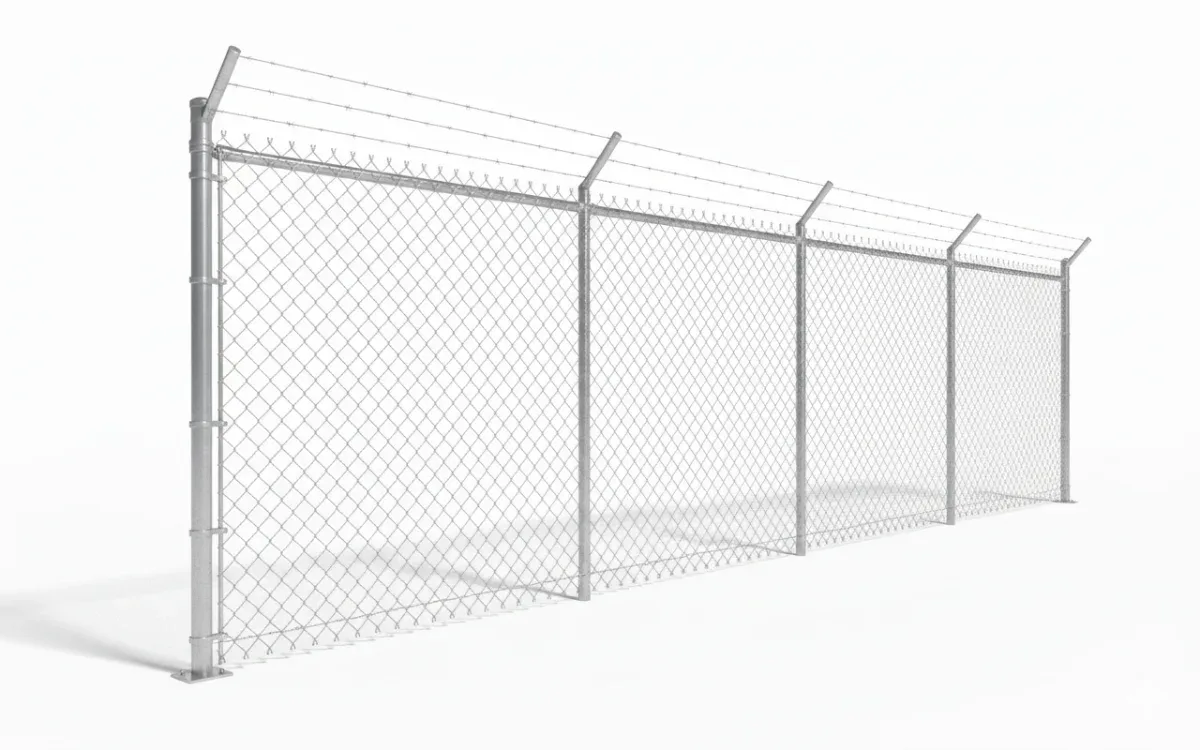
Chain-link is a flexible mesh formed by weaving wires together. It comes in rolls and is installed by tensioning it between posts and supporting it with tension wires. TGO Çit Sistemleri's galvanized chain-link fence system is offered with hot-dip galvanized coating, and the PVC-coated chain-link wire with PVC coating over hot-dip galvanizing. Both have a 50 x 50 mesh size; height options are 100, 120, 150, 180 and 200 cm, and roll lengths are 10, 15, 20 and 25 metres.
Panel fence
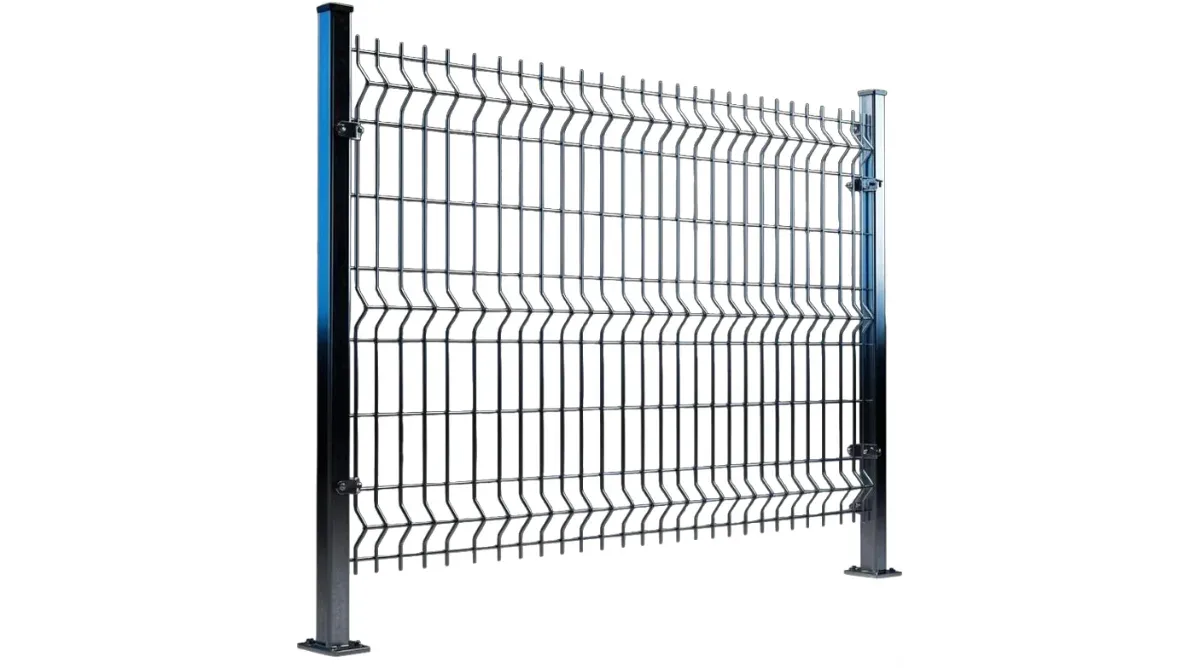
A panel fence is built by fixing rigid panels made of welded wire grids to posts. Each panel is an independent piece that keeps its own shape. There are options with different wire structures such as double panel, single panel and classic panel.
Criterion 1: Terrain Fit
The greatest strength of chain-link is its flexibility. Thanks to its flexible, elastic structure, it adapts easily to uneven, undulating and irregular terrain and can follow changes in ground level. This is an important advantage for farmland, vineyards and orchards, wooded areas and large plots with natural topography.
Because of their rigid structure, panel fences are generally installed in steps on sloping land. On gentle slopes this method gives a neat appearance; but on very uneven terrain with frequent level changes, the number of steps increases and the gaps between the bottom edge of the panel and the ground must be managed more carefully.
Which stands out on this criterion
On uneven and natural terrain, chain-link stands out. On flat or gently sloping land, both systems can easily be used.
Criterion 2: Appearance
Thanks to its flat, rigid surface, a panel fence offers a more orderly, modern and corporate appearance. A rhythmic repetition forms between the panels, and the alignment reads clearly along the fence line. For this reason it is often preferred in residential gardens, around residential complexes and on the front façades of factories.
Chain-link has a lighter, more understated appearance. Green PVC-coated mesh in particular blends in with the natural surroundings and marks the boundary without interrupting the view. However, if the mesh is not well tensioned, waving and sagging can appear over time, which affects the appearance.
Which stands out on this criterion
If an orderly, corporate appearance is wanted, panel fence stands out; if a light boundary that blends into the natural surroundings is wanted, chain-link stands out.
Criterion 3: Strength and Shape Retention
Thanks to their welded, rigid structure, panel fences keep their shape better after an impact. When a load comes onto a panel from outside, it is distributed along the panel. Structures with double horizontal wires, such as double panel, are more resistant to bending.
Because chain-link has a flexible structure, it absorbs impact by flexing. This flexibility is an advantage in some areas of use, for example when a ball hits it on a sports field. However, if the mesh is cut or the tension wires loosen, the tension of the whole line can be affected.
Which stands out on this criterion
If shape retention and rigidity are wanted, panel fence stands out; if a system that absorbs impact by flexing is wanted, chain-link stands out.
Criterion 4: Installation and Logistics
Because chain-link is transported in rolls, it is relatively easy to bring to remote land that is hard to reach. On long lines it can be unrolled quickly and attached to the posts; however, correct tensioning requires experience. Supporting corner and start posts with struts and positioning the tension wires correctly determine the system's performance.
Panel fences are transported and installed as individual panels. Attaching each panel to the posts gives a regular installation rhythm. Post spacing is fixed according to panel width, which makes planning the line easier.
Criterion 5: Security
Both systems can increase their security level with barbed wire or razor wire added to the top. The rigid structure of panel fence offers more noticeable resistance to cutting and bending. Chain-link is widely used for purposes such as enclosing large areas economically and controlling animal movement. For the planning steps in industrial facilities requiring high security, see our factory perimeter security guide.
Criterion 6: Maintenance
Both systems need little maintenance when produced with coatings such as galvanizing and PVC. For chain-link, periodically checking the tension wires and connections, and re-tensioning if necessary, is recommended. For panel fences, checking the clamps and fittings is sufficient. For detailed maintenance tips, see our article on fence maintenance and cleaning.
Preference by Area of Use
Farmland, vineyards and orchards
Chain-link stands out because it adapts to uneven terrain and can enclose large areas practically. For details, see our guide to fencing for fields, vineyards and orchards.
Sports fields
Chain-link is common on sports fields because it absorbs ball impact by flexing and comes in different heights. You can find our solutions on our sports field wire fences page.
Residential gardens and complexes
Panel fence stands out because of its orderly appearance and shape retention. Our guide to garden fence models can help those looking for an attractive solution for garden boundaries.
Factories and warehouse areas
Panel fence can be used on front façades and in sections near checkpoints, with chain-link on very long, uneven rear lines.
Summary Comparison Table
| Criterion | Chain-link | Panel fence |
|---|---|---|
| Terrain fit | Flexible fit to uneven terrain | Stepped installation |
| Appearance | Light, natural | Orderly, corporate |
| Shape retention | Absorbs by flexing | Rigid, keeps its shape |
| Transport | Rolls, easy | Panel by panel |
| Maintenance | Tension checks | Fitting checks |
| Where it stands out | Fields, vineyards, sports fields, large land | Homes, complexes, factory front façades |
Points to Watch When Comparing Quotes
Quotes for chain-link and panel fence can be hard to compare directly because their line items differ. For a sound assessment, we recommend looking at the following points.
In chain-link quotes
- Type of mesh coating: hot-dip galvanized, or PVC over galvanizing?
- Mesh size and wire thickness
- Are tension wires, tensioners and tie wires included in the quote?
- Are struts used on corner and start posts?
- Post type, section and coating
In panel fence quotes
- Panel type: double, single or classic
- Wire thickness and panel height
- Coating type and colour
- Material of clamps and fittings
- Number of posts, section and fixing method
For both systems, check whether installation is included in the quote and whether removal of the old fence and the gates are listed as separate items. You can find the meanings of technical terms in our glossary of fence technical terms.
Using the Two Systems Together
On large plots, using both systems together is often the most balanced solution. For example, at a farmhouse, panel fence can be used around the living area and chain-link along the field boundaries. At an industrial facility, panel fence can be chosen around the administrative building and entrance, with chain-link on the rear land. Choosing both systems in the same colour, for example green or anthracite, gives harmony at the transition points.
The Two Systems in Long-Term Use
A fence is an investment that will be used for years. This is why you need to think about its condition five or ten years later as much as its appearance on the first day. In chain-link, the most important factor in long-term performance is tension; when the corner posts are solid, the struts are at the right angle and the tension wires are in place, the mesh keeps its neat appearance. Sections that loosen over time can be re-tensioned and restored. If a section is damaged, only the relevant part of the mesh can be replaced.
In panel fence, each panel is an independent piece, so a single damaged panel can be replaced without affecting the others. The rigid structure of the panels helps maintain alignment for many years. In both systems, touching up scratches and knocks in the coating in good time prevents corrosion from starting and supports service life. You can review our quality processes, from production to coating, on our quality page.
Frequently Asked Questions
Which is more economical, chain-link or panel fence?
Cost varies according to fence length, height, coating type, number of posts, terrain conditions and the scope of installation. For this reason a general comparison can be misleading. Chain-link offers a practical solution on long, uneven lines, while panel fence is preferred in areas where an orderly appearance and shape retention are expected. You can request a survey for a comparative quote specific to your project.
Does chain-link sag over time?
The tension of chain-link depends on the tensioning during installation, the solidity of the corner and start posts and the correct positioning of the tension wires. Correctly installed chain-link keeps its tension. Periodically checking the tension wires and connections, and re-tensioning if necessary, is recommended.
What heights is chain-link available in?
Our galvanized and PVC-coated chain-link products are offered in heights of 100, 120, 150, 180 and 200 cm. Roll lengths are 10, 15, 20 and 25 metres, and the mesh size is 50 x 50. Which height is right for you is determined by the purpose of the fence and the area to be protected.
Can panel fence be installed on uneven terrain?
Yes, panel fence can be installed in steps on sloping land. On gentle and moderate slopes this method gives a neat appearance. However, on terrain with very frequent level changes, the number of steps increases and the gaps between the bottom edge of the panel and the ground must be planned carefully. On such terrain, chain-link may be a more practical alternative.
What is the difference between PVC-coated and galvanized chain-link?
Galvanized mesh has a hot-dip galvanized coating and a metallic grey appearance. In PVC-coated mesh, an additional PVC layer is applied over the galvanized layer; this layer provides extra barrier protection and offers a colour, such as green, that blends with the surroundings. PVC-coated mesh is often preferred for aesthetic reasons in gardens, parks and sports areas.
Finally, whichever system you choose, remember that the posts at the start and end of the fence line, the corner details and the gate connections must be planned with the same care, because the overall appearance of a fence is often decided at these junctions.
Chain-link and panel fence are two valuable systems with different strengths. When you consider the structure of your land, your expectations for appearance and your intended use together, it becomes clear which one, or which combination, suits you. To evaluate your land together, you can request a free site survey.
Get a free site survey and price quote for your project.
Message Us on WhatsApp