Louvre Fence or Panel Fence? A Detailed Comparison by Need
Almost everyone who decides to have a fence built asks the same question at some point: louvre fence or panel fence? Both systems are metal, both are designed for long-term use and both are widely used in residential and commercial projects. However, they answer very different needs. In this article, rather than introducing each system on its own, we put them side by side against the criteria that really matter when deciding. For each criterion we explain which system stands out and in which situations it makes more sense to use both together. If you would like to read about the general features of each system separately, see our louvre fence guide and our panel fence guide.
A Brief Introduction to the Two Systems
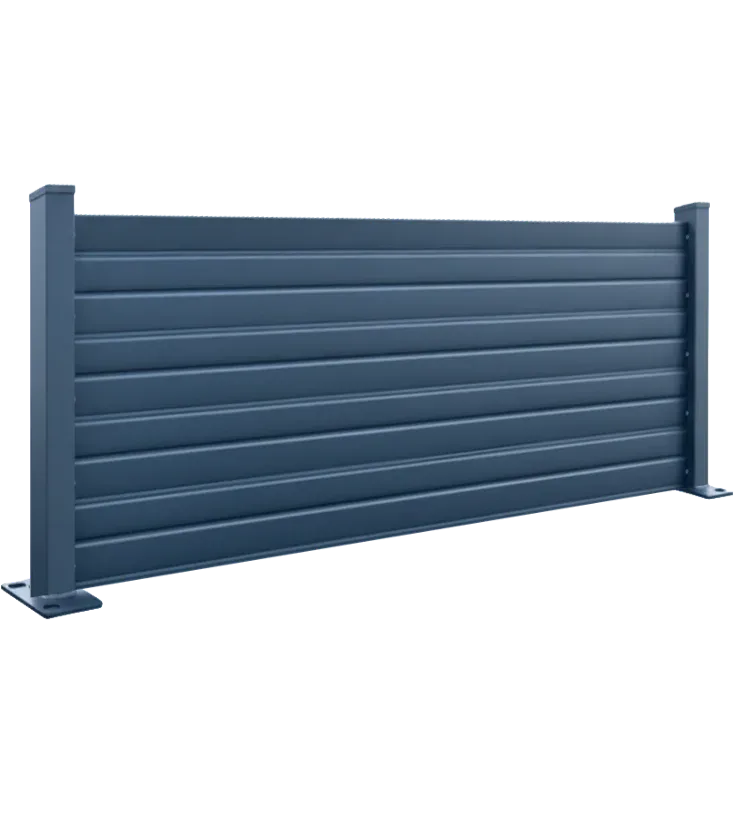
Louvre fence
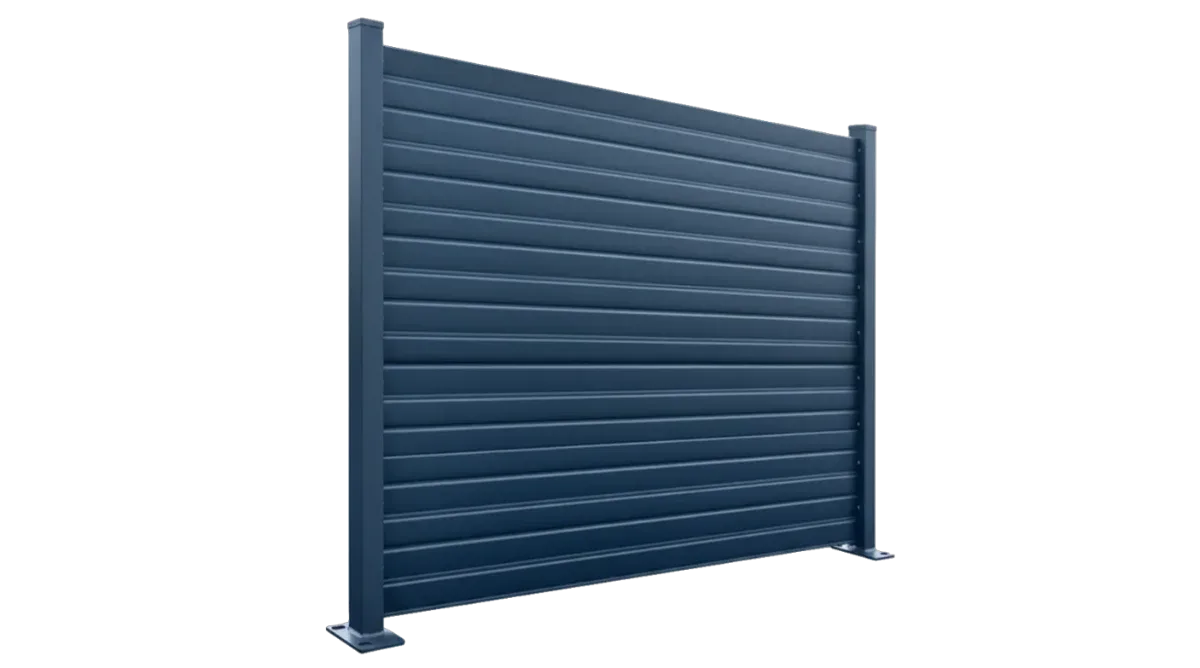
A louvre fence consists of slats placed horizontally between metal posts. The slats largely block the view, while the air gaps between them let part of the wind pass through. TGO Çit Sistemleri's louvre fence model is produced with 1.4 – 1.6 mm box profile and 1.0 – 1.2 mm slat thickness, with Jotun electrostatic powder coating, and is offered in anthracite grey, golden oak and white.
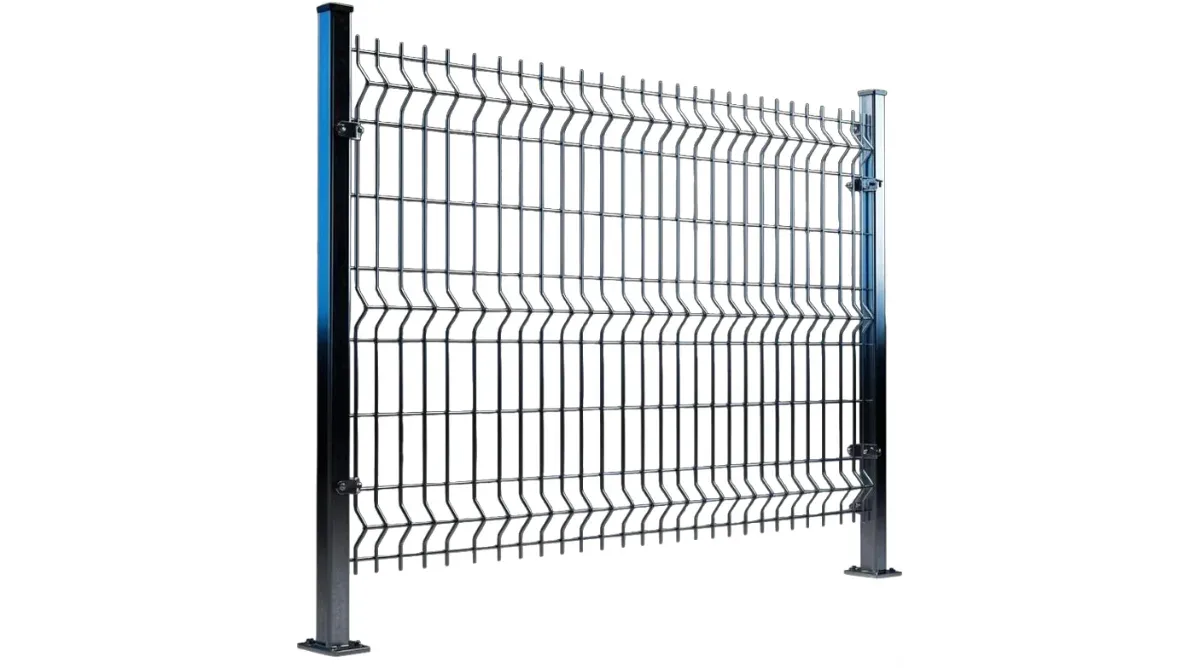
Panel fence
A panel fence is built by fixing panels made of welded wire grids to posts. It does not block the view; it marks the boundary clearly while the inside remains visible from outside. There are options with different wire structures, such as double panel fence, single panel fence and classic panel fence.
Criterion 1: Privacy
The most obvious difference between the two systems is privacy. With its slatted structure, a louvre fence largely prevents the inside from being seen from outside. This is an important advantage for gardens facing the street, seating and pool areas and storage areas you do not want to be visible from outside.
A panel fence, with its transparent structure, leaves the view open. If privacy is wanted, artificial grass fence can be applied on the panel or hedge plants can be planted in front of it. However, these solutions may not create a surface as uniform as the orderly, permanent screen a louvre fence provides.
Which stands out on this criterion
If privacy is your priority, louvre fence stands out. If you want the view to remain open (for example for security cameras or a landscape view), panel fence is more suitable.
Criterion 2: Wind and Load
Wind is one of the most important external loads on fence systems. Open panel fences let most of the wind through, so the load on posts and foundations is relatively low.
Louvre fences, on the other hand, take more wind load because they close most of the surface. Although the air gaps between the slats help balance this load, post section, post spacing and foundation size must be planned according to wind conditions. This planning becomes even more important in windy locations such as open land, hilltops or the seaside. For detailed information, you can read our article on wind load and fence selection.
Which stands out on this criterion
In very windy, open areas, panel fence takes less load. If louvre fence is chosen, posts and foundations should be planned according to wind conditions.
Criterion 3: Appearance and Architectural Harmony
With its straight, horizontal lines, a louvre fence harmonises strongly with modern architecture. It works like a surface that completes the façade and gives the building a corporate or stylish look. Thanks to the colour options, it can be matched with window frames and façade materials.
A panel fence has a simpler, more understated look. It brings the garden and the building itself to the fore; the fence works almost like an invisible boundary. On large plots and in areas where the natural landscape is in the foreground, this simplicity is an advantage.
Which stands out on this criterion
If you want a distinct, modern surface that looks like part of the façade, louvre fence stands out; if you want an understated boundary that does not interrupt the view, panel fence stands out.
Criterion 4: Security
Both systems provide security when installed at the right height and with the right posts; however, they contribute to security in different ways.
How louvre fence contributes to security
Because a louvre fence makes the area inside invisible, it helps deter opportunistic attempts. Someone looking from outside cannot see what is inside, who is there or where valuables are kept. Depending on the design and height, the horizontal slat structure should be assessed in terms of climbing.
How panel fence contributes to security
Because a panel fence leaves the view open, it allows security cameras and security staff to monitor both sides of the fence. Rigid systems such as double panel resist bending. In areas requiring high security, barbed wire or razor wire can be added on top of the panel.
Which stands out on this criterion
In industrial and high-security areas, panel fence is often preferred because of its ease of surveillance and its compatibility with an upper security layer. In homes, louvre fence may stand out because it makes the inside invisible.
Criterion 5: Adapting to the Terrain
Panel fences easily adapt to stepped installation on sloping land; panels can be attached to posts at different steps. Stepped installation is also possible with louvre fences, but because of the horizontal line of the slats, the step transitions need to be planned more carefully. On uneven terrain and very long perimeter lines, flexible systems such as galvanized chain-link can also be considered.
Criterion 6: Maintenance and Cleaning
Both systems require little maintenance when produced with protective coatings such as electrostatic powder coating and galvanizing. The wide, flat surface of a louvre fence can make dust and dirt more visible, but its flat surface also makes cleaning practical. Leaves and plant branches can get caught in the wire grid of panel fences; if they are used together with hedge plants, the plants need to be pruned so that they do not strain the fence. For detailed maintenance tips, see our guide to fence maintenance and cleaning.
Summary Comparison Table
| Criterion | Louvre fence | Panel fence |
|---|---|---|
| Privacy | High | Low (increases with additional solutions) |
| Wind load | Higher, needs planning | Lower |
| Appearance | Modern, distinct surface | Simple, understated |
| Surveillance | Inside not visible from outside | Both sides can be monitored |
| Sloping land | Careful step planning | Easily adapts to steps |
| Where it stands out | Villas, street frontages, corporate front façades | Factories, back gardens, large plots |
Using Both Systems Together
In many projects the right answer may be “both”. For example, at a villa, using louvre fence on the front side facing the street and panel fence on the neighbour boundaries and in the back garden balances both privacy and budget. At a factory, louvre fence can be planned on the front façade where corporate appearance matters, with panel fence and upper security elements on the long rear sides. Choosing both systems in the same colour gives a unified look at the transition points.
Harmony with gates
Whichever system you choose, it is recommended that the gates be designed in the same language. Louvre gate models that match louvre fences and panel fence gate models that match panel fences make this unity easier.
Example Scenarios from Real Life
As well as theoretical criteria, seeing the decisions made in similar situations makes choosing easier. The scenarios below summarise situations we often encounter.
Scenario 1: A detached house facing a main road
Heavy vehicle and pedestrian traffic passes in front of the house, and the family wants to sit comfortably in the garden. In this case, louvre fence on the side facing the road creates a visual screen that positively affects privacy and the perception of noise. On the neighbour boundaries, panel fence can balance the budget.
Scenario 2: A holiday home with a large garden
The plot is large, the view is beautiful and the neighbours are far away. Here a panel fence marks the boundary without interrupting the view. If a small screen is wanted only around the seating area, artificial grass fence or a short section of louvre fence can be added there.
Scenario 3: A workshop with an open storage area
Materials are kept in the open in front of the workshop, and the owner does not want them to be visible from the road. Louvre fence on the front side makes the storage area invisible, giving both a tidy appearance and a deterrent effect. On the rear side, panel fence and upper security elements can be used.
Scenario 4: A villa on a windy hilltop
The house is in a location exposed to wind, and privacy is also wanted. In this case louvre fence can be chosen, but post section, post spacing and foundation size must be specially planned according to wind conditions. Alternatively, panel fence with planting can be considered on the side most exposed to wind, with louvre fence on the other sides.
A Short Checklist for Deciding
- Don't want to be seen from outside? → Louvre fence
- Want to preserve the view or camera visibility? → Panel fence
- Does your plot get a lot of wind? → Panel fence, or louvre fence planned for the wind
- Want a modern, distinct façade look? → Louvre fence
- Want to enclose a long perimeter economically? → Panel fence
- Do different sides have different needs? → A combination of both systems
Frequently Asked Questions
Is louvre fence more durable than panel fence?
Durability depends less on the type of system than on the thickness of the material used, the quality of the coating and the post and foundation work. Both systems can be used for many years with the right material and correct installation. Because a louvre fence takes more wind load due to its closed surface, its post and foundation planning requires more care; a panel fence is less affected by wind thanks to its open surface.
Can privacy be added to a panel fence later?
Yes. A screen can be created by applying artificial grass fence on the panel fence, or hedge plants can be planted in front of the panel. These solutions are practical ways to gain privacy without removing the existing fence. However, if a completely uniform and orderly screen is wanted, it may be better to choose louvre fence on that side.
Does using two different fences on the same plot spoil the appearance?
Not when planned correctly; on the contrary, it gives a functional and balanced result. Choosing both systems in the same colour, planning height transitions properly and placing the transition points at natural breaks such as corners or gates gives a unified look.
Which system is installed faster?
Installation time varies depending on fence length, ground structure, slope, number of gates and whether the installation is on a wall or in the ground. For this reason, it would not be right to give a general duration by system type. The work schedule becomes clear after the survey, according to the conditions of the project.
What should I do if I can't decide?
You can send us photos of your plot, approximate measurements and your priorities. During the free on-site survey we assess each side separately and recommend the system or combination of systems that suits you. To prepare measurements, you can use our guide on how to measure for a fence.
There is no single right answer to the question louvre fence or panel fence; the right answer lies in your priorities. When you consider privacy, wind, appearance, security and terrain conditions together, it becomes clear which system or combination suits you. To evaluate your project together, get in touch with us.
Get a free site survey and price quote for your project.
Message Us on WhatsApp