Solar Farm Perimeter Fencing: A Fence Planning Guide for Solar Power Plants
Solar power plants are facilities built on large plots of land and often operated unmanned. In these areas with panels, inverters, cables and transformer stations, perimeter security plays an important role in protecting the investment. Beyond marking the boundary of the facility, a solar farm perimeter fence takes on tasks such as deterring unauthorized entry, protecting equipment and providing controlled access for maintenance teams. In this guide we cover the points to consider when planning a solar power plant fence in terms of long perimeter lines, terrain fit, shading, top security, gates and maintenance access.
The Particular Conditions of Solar Projects
Solar sites differ from other industrial facilities in some respects. Knowing these differences is the first step in choosing the right fence system.
Very long perimeter lines
Depending on the size of the land, the perimeter line can be kilometres long. In this case the system's cost per metre and the speed of transport and installation become decisive.
Rural and uneven terrain
Solar plants are generally built in rural areas, sometimes on sloping and uneven land. The terrain makes the fence's ability to follow the ground an important criterion.
Unmanned operation
Most solar plants are monitored remotely without permanent staff. For this reason the fence should be thought of as a security layer that works together with camera and alarm systems.
Sensitivity to shading
The efficiency of solar panels is affected by shade. The fence needs to be positioned so as not to cast shade on the panels, and its height determined accordingly.
Step 1: Plan the Fence Line
Where the fence line will run should be planned together with the panel layout, service roads and land boundaries.
Distance from panel rows
It is recommended to leave a distance between the fence and the outermost panel row such that the fence's shadow does not reach the panels and maintenance vehicles can pass. This distance is determined by the height of the fence, the slope of the land and the orientation of the panel rows.
Service road
Having a service road along the fence line makes both checking the fence and accessing the panel rows easier.
Land boundaries
It is important that the fence stays within the title deed boundaries to avoid disputes with neighbouring land. For a general framework on boundary matters, see our article permits and neighbour boundaries in fence building.
Step 2: Choose the Fence System
Galvanized chain-link
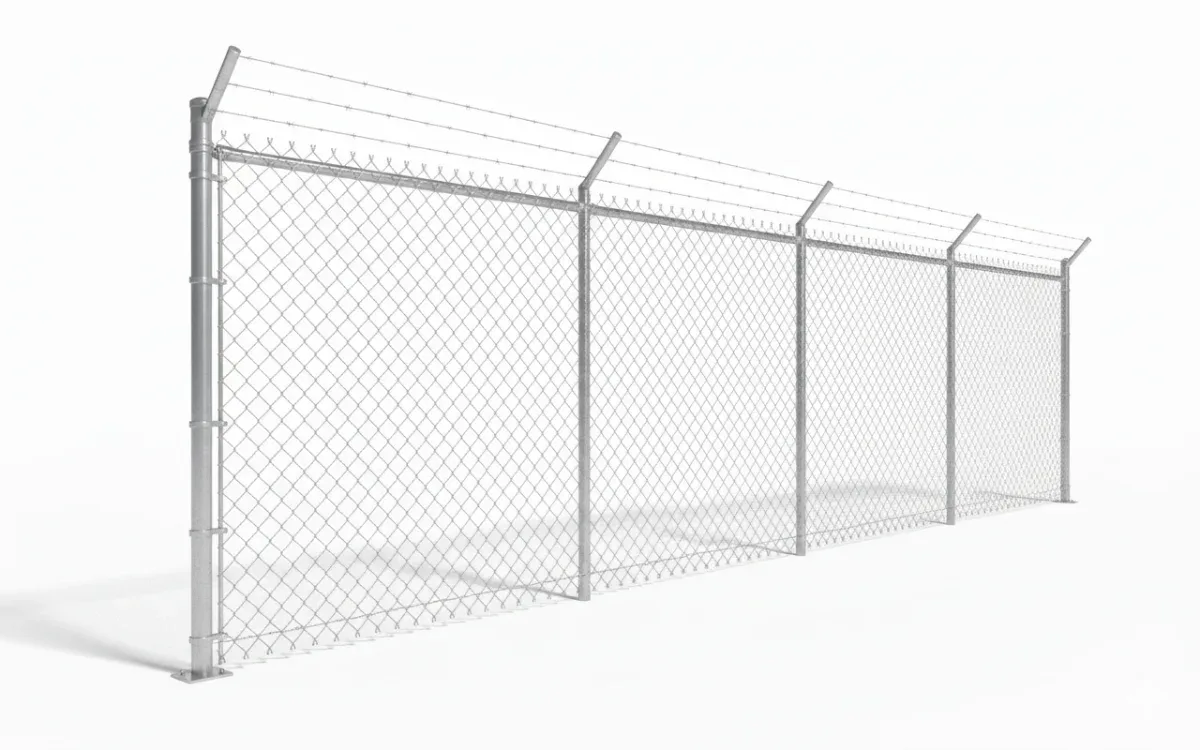
Thanks to its flexible structure, the galvanized chain-link fence system adapts easily to uneven land and offers a practical solution on long perimeter lines. Its open mesh reduces wind load and minimizes the risk of casting shade on the panels. It is offered with a 50 x 50 mesh size and height options from 100 cm to 200 cm; because it is transported in rolls, it can easily be taken to hard-to-reach land.
PVC-coated chain-link wire
For projects that want additional coating protection, PVC-coated chain-link wire is offered with a PVC layer over hot-dip galvanizing. Its green colour, which blends with the rural landscape, makes the facility less conspicuous in its surroundings.
Panel fence
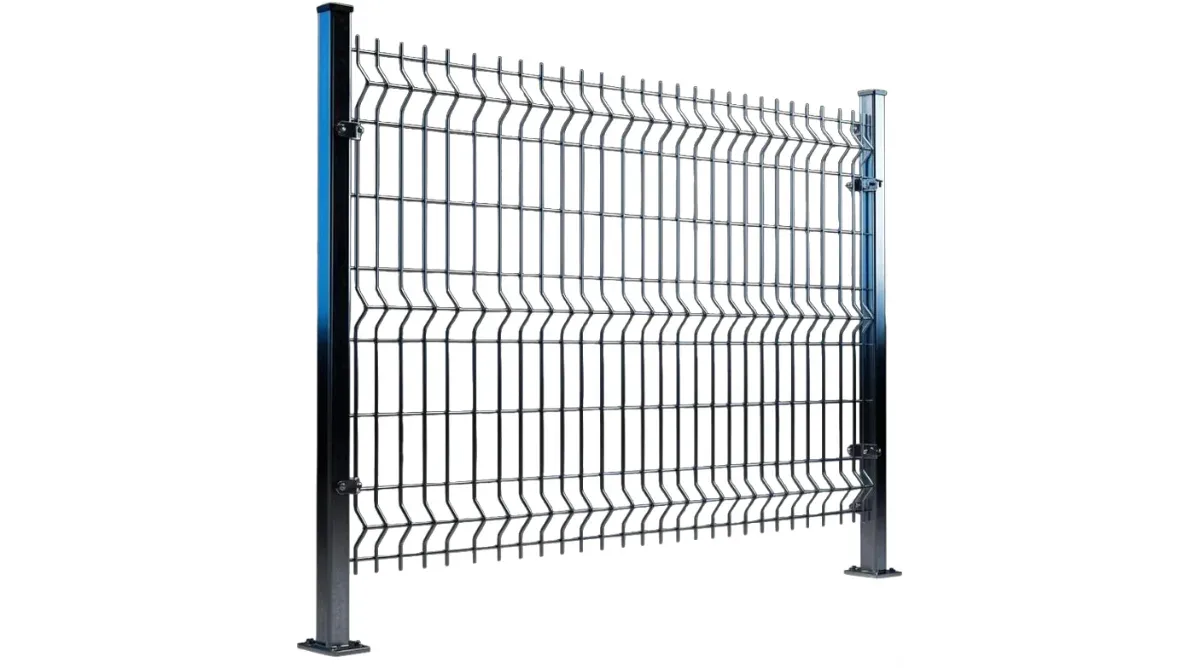
In sections where higher security and a neat appearance are wanted, such as around the transformer station, control building and main entrance, double panel fence can be considered. Its rigid structure provides more pronounced resistance to cutting and bending.
Why are closed-surface systems avoided?
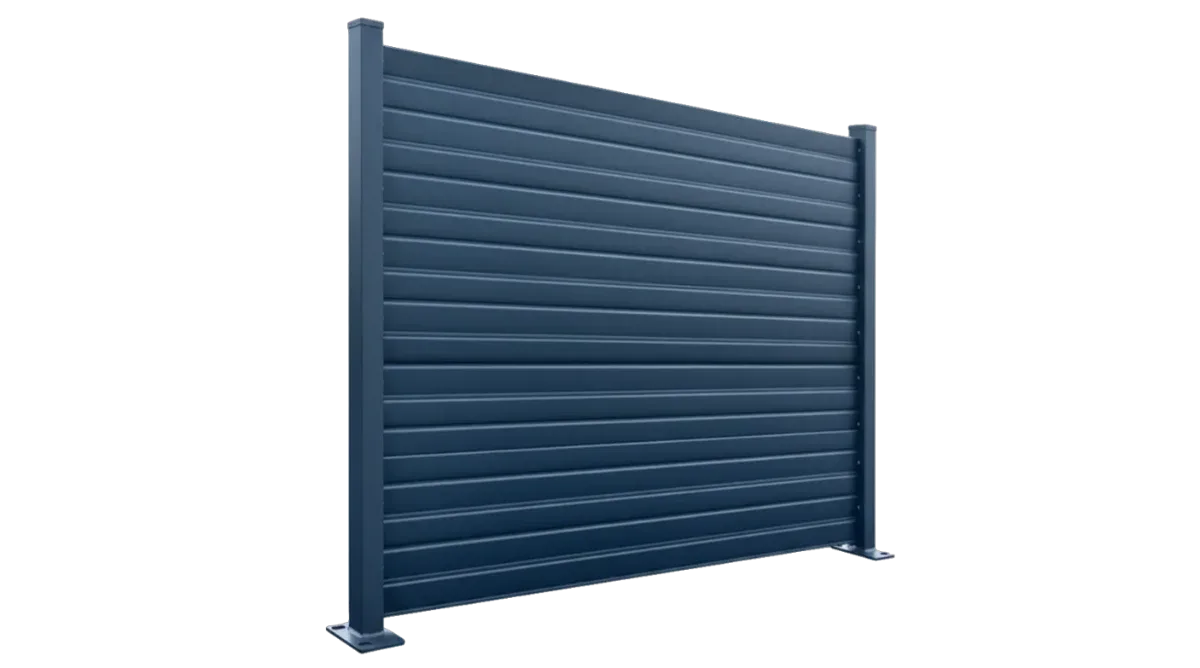
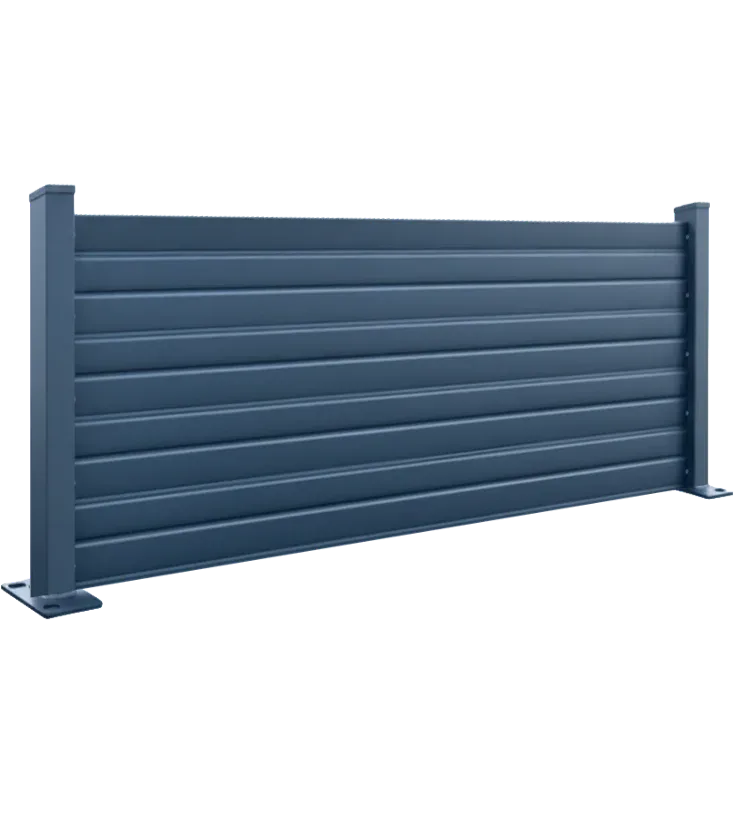
Systems that block the view, such as louvre fences, are generally not preferred around solar plants. The main reasons are the risk of casting shade on the panels, high wind load in open terrain and the need for cameras to monitor the outside of the fence. For detailed information on wind load, read our article wind load and fence selection.
Step 3: Plan the Top Security Layer
At unmanned facilities, reinforcing the fence with additional anti-climb measures is a common approach.
Barbed wire
Barbed wire makes climbing harder when applied on top of the fence in one or more rows using bracket arms. TGO ÇİT reverse-twist barbed wire is produced from high-carbon wire; zinc-alloy aluminium-coated and green PVC-coated options are available.
Razor wire
In sections requiring higher security, helical or flat razor wire can be used. Critical sections such as transformer stations and equipment stores can be prioritized in this respect.
Bottom edge security
Finishing the bottom edge of the fence close to the ground and fixing it to the ground where necessary makes it harder to get underneath and for wild animals to enter. This detail becomes important considering that wild animals may damage the cables under the panels.
Step 4: Gates and Access
At solar sites, gates should be planned wide enough for maintenance vehicles, cranes and construction machinery to pass.
Main entrance
The main entrance is generally located close to the control building and fitted with a wide gate suitable for vehicles. If remote access is needed, gate automation can be planned with automatic gate motors.
Service gates
On long perimeter lines, it can be useful to have service gates at certain intervals to make access easier in emergencies and during maintenance work. These gates need to be kept locked and under control.
Emergency access
The location and width of entry points should be planned so that the fire brigade and other response teams can reach the site in emergencies such as fire.
Step 5: Integration with Electronic Security
A solar farm perimeter fence is more effective when planned together with camera, motion detection and alarm systems. Open-surface chain-link and panel systems allow cameras to monitor both sides of the fence. Camera poles and lighting elements should be positioned so as not to form a step for climbing the fence. In addition, if sensor and cable systems are mounted on the fence, the fence must be sturdy and taut enough to carry them.
Step 6: Posts and Foundations
On long perimeter lines, post and foundation work directly affects both the duration and the durability of the project. In chain-link systems, corner and start posts need to be supported with struts, intermediate tensioning points created and tension wires positioned correctly. Depending on the ground, concrete foundations or other fixing methods are considered. For details, see our article choosing fence posts and foundations.
Step 7: Maintenance and Monitoring
At unmanned facilities, the condition of the fence should be checked regularly. Reviewing the fence line during panel cleaning and maintenance visits is a practical approach.
- Checking mesh tension and tension wires
- Detecting holes dug by wild animals at the bottom edge
- Checking gate locks and hinges
- Clearing grass growing at the foot of the fence (for fire risk and shading)
- Checking the tension of top security elements
For general maintenance recommendations, see our guide fence maintenance and cleaning.
Grass and vegetation control
At solar sites, grass growing at the foot of the fence and under the panels can create a fire risk in the summer months and cast shade on the panels. Clearing grass along the fence line should be included in the site's general maintenance plan.
The Difference Between Rooftop and Ground-Mounted Solar
This guide mainly covers ground-mounted solar plants. Rooftop solar installations generally do not need a perimeter fence; however, roof access points, ladders and railings at roof edges are assessed for safety. Even with a solar plant on a factory roof, the facility's own perimeter fence indirectly contributes to protecting the plant. For general planning of perimeter security at industrial facilities, see our guide factory perimeter security fences.
Regional Conditions
Solar plants can be built in different climate regions of Türkiye. Regional conditions affect fence planning:
Regions with high wind
On open plains and high plateaus, wind load can be significant. Open-mesh systems are an advantage in these regions, and the sturdiness of corner posts and struts becomes even more important.
Regions with snowfall
In regions with heavy snowfall, snow accumulating at the foot of the fence can create additional load on the mesh and posts. A check after winter makes it possible to detect slackening and damage caused by this load.
Humid and coastal regions
In regions with high humidity and salt levels, coating quality becomes more decisive. Double-layer protection options such as PVC over galvanizing can be considered in these regions. You can find details in our article the difference between galvanizing and electrostatic powder coating.
Project Schedule and Logistics
In solar projects, fence installation is usually carried out before panel installation or in parallel with it. Installing the fence early also helps protect materials and equipment during construction. On long perimeter lines, delivering material to the site in stages reduces the need for storage on site. The installation schedule is determined after the site survey according to the perimeter length, terrain conditions and access.
Frequently Asked Questions
Which fence system is preferred around solar plants?
Around solar plants, galvanized chain-link systems are frequently preferred because they adapt to long perimeter lines and uneven terrain, have low wind load and do not cast shade on the panels. In critical sections such as the transformer station and control building, more rigid panel fence systems can be considered. Barbed or razor wire can be applied on the top section against climbing.
Will the fence cast shade on the panels?
When the height of the fence and its distance from the panel rows are planned correctly, the risk of shading can be minimized. Open-mesh wire fences create much less shade than closed-surface systems. The position of the fence line should be determined at the project stage together with the panel layout.
How can we take precautions against wild animals?
Finishing the bottom edge of the fence close to the ground and fixing it to the ground where necessary, or creating a section buried in the soil, makes it harder for wild animals to get underneath. During regular checks, it is also important to detect holes dug at the bottom edge and repair them quickly.
How is installation planned on long perimeter lines?
On long lines, installation is usually planned in stages. Material delivery, the working pattern of the teams and access conditions on the site are the basic elements of this planning. The installation schedule becomes clear after the site survey according to the size and conditions of the project.
How can we get a quote for a solar project?
You can send your facility's site plan, total perimeter length, gate requirements and any technical specification via our contact page or WhatsApp. After the site survey, a quote is prepared by section with clearly specified items. For our quality certificates, see our quality page.
In solar projects the fence is often seen as a small item in the project budget; yet it is the first layer protecting the equipment throughout the plant's operating life. For this reason, evaluating the fence system not only by installation cost but also by long-term maintenance needs, ease of repair and fit with the terrain reduces the risk of unexpected costs during operation. The right choice at the start of the project provides perimeter security that needs less intervention over the plant's years of operation.
In addition, being able to reach every section of the fence easily lets the operations team carry out regular checks without interruption; for this reason, planning service roads and gates should also be treated as part of the long-term maintenance strategy.
A well-planned solar farm perimeter fence is a security infrastructure that protects your solar energy investment for many years. Choosing a system suited to long perimeter lines, taking shading sensitivity into account, planning gates and maintenance access and integrating with electronic security systems are the basic steps of this planning. To evaluate your project together, contact us.
Get a free site survey and price quote for your project.
Message Us on WhatsApp